
I’ve always enjoyed reviewing books and would love to have completed more but it just hasn’t been practical. Most of my reviews aren’t overly extensive (as you’ll see) more just some general comments and my overall view of the book when I’ve finished it. I think it’s important to write a review when the material is still fresh in your mind – otherwise there’s a good chance you’ll be doing it a disservice. Hence the reason why this page isn’t more populated with reviews of some of my favourite books! Once I’ve re-read them again, I’ll try and progress this. A review is a great way to share your opinion of a book, especially if you’re itching to make a criticism or desperate to shower praise. Again, this normally happens when you’ve just finished reading it. I would add one note of caution to this page. I tend to be very honest in how I feel about a piece of work so apologies in advance if I’m insulting anyone! At the end of the day, it is only my personal opinion which of course will be different to others.
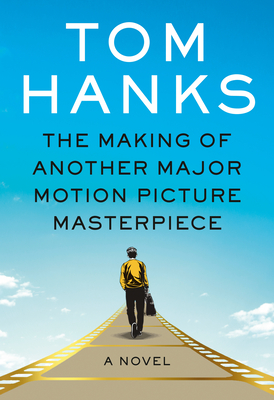
Review 25. The Making of Another Major Motion Picture Masterpiece (Tom Hanks)
Read review
As a huge Tom Hanks fan, I was looking forward to reading this and the floods of positive testimonials at the beginning really added to the buildup. I’m sorry to say however, that these were seriously misleading, and I didn’t enjoy the book at all.
It was so difficult to get into: filled with unnecessary information, absent of interesting characters (apart from maybe one or two) and lacking a strong plot – at least for the first couple of hundred pages. This is the key point in fact, the book takes way too long to get going, meaning only the most stalwart of readers will be able to see it through.
I was sort of hooked by the family in Lone Butte at the beginning, but this storyline seemed to just evaporate and only returned near the end. Maybe if you are in the business of movie making things would be different, but I found the filming parts extremely dull and almost dreaded the Day ‘X’ of 53 shooting days headings as it reminded me how many were still to come.
A couple of standout moments do stick in my mind, the last meeting between Al, Bill Johnson and Dace which they spent ‘laughing their asses off’ before Dace died and also the death of Elliot. The OKB character was sort of amusing, but beyond that, I’m really struggling to pull out any positives.
So all in all, a disappointing experience, but I do still love you Tom.
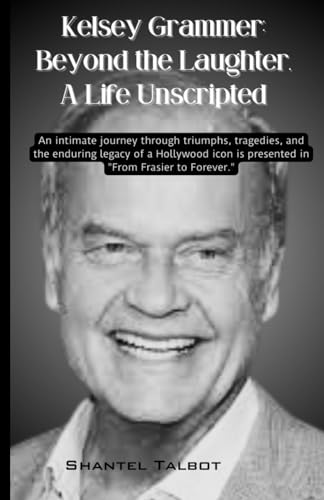
Review 24. Kelsey Grammer: Beyond the Laughter, A Life Unscripted (Shantel Talbot)
Read review
Unfortunately, I wouldn’t recommend.
I actually suspect it was written by ChatGPT.
Riddled with errors, there is no substance behind it at all.
I also asked for a refund, as soon as I recieved it, which Amazon kindly obliged to without question.
Review 23. Lessons in Chemistry (Bonnie Garmus)

Read review
Lessons in Chemistry follows the plight of protagonist Elizabeth Zott (there’s a name which won’t be forgotten in a hurry), a chemistry researcher with huge potential, but is repeatedly kiboshed in her career, typically by sexist males in positions of power. After being wrongfully ejected from her research position at a Hastings Research Institute, she reluctantly agrees to host a cooking show, Supper at Six, and, against all advice, weaves in her passion for chemistry, creating a global success which no-one could have predicted.
Of course the show is much more than a science lesson or an opportunity to share nifty cooking tips. It is a deep exploration of identity, ambition, and the pursuit of happiness, whilst furiously rebelling against unjust societal expectations not least being gender dynamics in the workplace. Elizabeth explains to her viewers the importance of achieving their goals, shedding light on the challenges faced by women in STEM and reminds them of the transformative power of knowledge, using the subject of chemistry as her primary tool.
I’ll admit I was worried the novel would come across as an aggressive, feminist piece, but this often contentious topic is handled refreshingly well and Elizabeth’s despicable treatment will be identifiable to so many others, the majority hopefully being in the past rather than the present. Having worked in two major scientific research organisations in the UK, I have never (thankfully) witnessed sexism in a professional situation. Of course as a male born in the mid-eighties, I am not best placed to comment and in this context, the 1960s setting of the novel seems as different to the present as night is to day.
Undoubtedly, Elizabeth Zott is an inspiring character, with her determination to stay true to herself, refusal to ‘cash-in’ or succumb to popularity and relentless questioning of what so many others have accepted to be the norm. Her decision not to change the way she dresses for the show, use of scientific jargon, eventual dedication to rowing and views on religion are all examples of this. Garmus drip-feeds the background of her character to the reader slowly throughout the book; her brother’s suicide, her mother being a sell-out, her feelings towards her father – She pictured him, her face hardening like cement – which is an effective tactic as it maintains a certain level of mystery around her. The shocking sexual assaults, Meyers early on and then Lebensmal later highlight all too vividly what she has had to endure whilst so innocently attempting advance her research career (in abiogenesis). There was only one point where I didn’t like her character – the Trumpesque moment where she joked about wives poisoning their husbands with mushrooms in their meals. Towards the end of the novel, we are given a slight insight into her human side: With that news, the audience instantly regained its vigour, and Elizabeth, despite her normally serious demeanor, pictured Dr. Fillis scrubbing in and could not help it. She smiled. And of course there is the fantastic scene when the tide has turned for her former head of department Donatti, when she is his last hope of avoiding dismissal: “Sorry, Donatti,” she said, handing him a pen. “You’re just not smart enough.”
Many readers will find it hard not to form an emotional attachment to Elizabeth’s daughter Madeline (or Mad) whom she had with the established scientist Calvin Evans before his premature and tragic death. I confess I found the arc with Calvin’s background and eventual family revelations confusing, but this was a minor detraction to the overall plot. It was such a touching moment when Mad described the photo in the graveyard as the only time her family were pictured together and of course the evolution of the family tree – a school assignment issued by the detestable teacher Mrs. Mudford – where the acorn represents her fairy Godmother but ultimately Calvin’s biological mother, Avery Parker.
Garmus binds the overall story together expertly with some clever character links such as Miss Frask who starts out as a secretary at Hastings, becomes a typist for Reverend Wakley and then ends up as the head of personnel at her original institution. Then there is Wakely himself who is Calvin’s pen friend before he later meets Mad and assists with her finding out about her father’s past. And finally the reporter Roth, who attempts to speak with Elizabeth at Calvin’s funeral, appears again during the bomb attempt and later writes the article for Life Magazine. The Harriet and Walter romance was also a nice twist as many readers might have expected a union between him and Elizabeth but, perhaps rightly so, this doesn’t play out.
Probably the most powerful aspect of the novel is the use of chemistry (and humour) to convey Elizabeth’s views and motivations towards life. Not only that, but the profound impact she is having on the viewers of Supper at Six is evident:
“Really?” he snapped. “Because two weeks ago, one of my patients refused to push until you finished explaining the Maillard reaction.”
“Correct me if I’m wrong, Sheila,” one of the women was asking, “but didn’t she say cast iron requires zero-point-one-one calories of heat to raise the temperature of a single gram of atomic mass by one degree Celsius?”
She was very good at explaining, he realized, having a way of making even dull concepts seem exciting.
And how could we not love the perspective of Elizabeth’s most loyal and loving companion, her dog Six-Thirty, who has dedicated his life to protecting mother and daughter following his unintended part in Calvin’s death.
…what was so hard about finding a needle in a haystack? The scent of high carbon steel wire was unmistakable.
Overall, Lessons in Chemistry is a fantastic and thought-provoking read which will leave its audience both entertained and enlightened. With its mixture of humour and scientific intrigue, it’s a book which will likely remain relevant for decades to come. Garmus has effectively demonstrated through Elizabeth Zott the transformative power of knowledge, the importance of staying true to yourself, and the rewards for challenging the norm when it no longer makes sense.
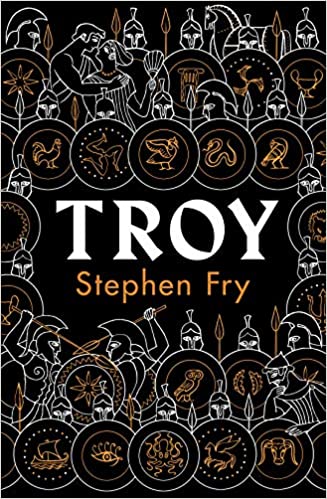
Review 22. Troy (Stephen Fry)
Read review
For those who already have an interest, or perhaps even an established passion, for the legendary Trojan war and the Greek myths/Olympian deities, Fry has created a gem in Troy: Our Greatest Story Retold. It will undoubtedly satisfy the most unslakable of thirsts, much like a wannabe immortal, desperately knocking back a chalice of nectar.
One might foolishly think that nothing further could be added, at least nothing which requires a meaningful investment of our precious time, to the already saturated literature around the subject of the Trojan War, but it is without hesitation that I beg to differ. Fry offers a number of unique angles towards perhaps the world’s most famous conflict and it is these angles which I humbly attempt to highlight with this review.
The first is the way he uses the Greek gods themselves. Their subtle, yet more often than not deadly, divine interventions, which repeatedly shape the twisting plot of the decade-long campaign, are exemplified time and time again: The Olympians enjoy the mauling and brawling of their playthings, their little human pets.
It’s suggested that the love goddess Aphrodite is behind the vision of Helen which torments Paris: Being a prince in a palace was charming beyond words but it brought him closer to that vision of a face, that promised “Helen”.
And Paris would have almost too easily have been slaughtered by Menelaus had the same goddess not interfered again: he fell to his knees in the dust and Menelaus began to drag him along the ground by the chin strap. He would have throttled the life from him, had she not broken the straps and Menelaus jerked backwards, grasping an empty helmet. She’d caused Paris to disappear in a swirl of dust and confusion.
And the great Hector is temporarily saved from Achilles by Apollo: Achilles closed on him with a terrible series of screams, but Hector disappeared into a cloud of mist.
The gods have their own way of doing things, as Fry so eloquently puts it.
The second, and perhaps most powerful aspect of the novel however, has got to be the use of modern-style dialogue to bring these ancient and beloved tales back to life.
‘Odysseus! Look at the state of my palace. Every bachelor from the islands, highlands and lowlands has crowded in, begging for Helen’s hand. I have been offered bride-prices that would make your eyes pop. There are idiots who think I’m lucky to have such a daughter, but they simply haven’t thought it through.’ This is Tyndareus, speaking of the endless number of suitors determined to win his daughter in marriage.
‘Loathsome little brat,’ muttered Peleus. He is speaking of his half-brother Phocus shortly before killing him with a discus.
‘Well, you’re always telling me about diplomatic missions and royal responsibilities and all that,’ said Paris. ‘How would it be if I took a – what’s the word? – an “embassy” – is that it? Or is it a “legation”? One of those.’ Fry effectively makes Paris out to be a modern-day arrogant teenager.
‘Yes, crafty bugger, no question about that,’ said Agamemnon. Speaking of Odysseus.
Achilles smiled. ‘Sounds like fun.’ This is when his disguise is rumbled and he finally agrees to go with the Greeks to fight at Troy, much to the dismay of his poor mother Thetis.
‘Will you stop opening and closing your mouth like a damned fish and come out with it. Who has been mad enough to offend divine Artemis?’ Here, Agamemnon, just before he realises that he is in fact the one responsible for the heinous act.
‘Hear me proclaim this, you loathsome turd from the arse of Typhon.’ Achilles speaking of Agamemnon.
Damn you, Odysseus,’ gasped Philoctetes. ‘If we do die together here, I’ll probably be cursed to spend the afterlife with you endlessly jabbering on in my ear.’
‘Oh how they love that cunning Ithacan…the evil bastard saw the look in my eyes though. He knew I knew; and I knew my days were numbered. Sinon speaking of Odysseus.
Whoa there, my proud beauty,’ said Deiphobus with a laugh, jumping up to spank the rump. This is when he is with Helen, standing beside the infamous horse, just moments before the final devastation of Troy.
Most readers will of course be aware of the general story, and it’s hard not to misplace some temporary faith on a different outcome for the once believed impenetrable Trojans. Some may be less aware however, of the details around the first time Troy fell, as Fry explains at the hands of legendary hero Heracles after he is double-crossed by the crooked Laomedon who to be fair, probably ended up getting exactly what he deserved. Heracles decides to spare the defenceless Priam this time round, who of course goes on to establish Troy as probably the greatest and most powerful nation on Earth, and rule over it as King. The curses of Tantalus and Pelops however, never seem far away, casting an ominous shadow over the rich and plentiful kingdom.
It’s worth digressing further for a moment, to admire the power in Fry’s writing which so effectively brings these wonderful tales to life.
The athletes all around Paris beat their chests and cried out in chorus five times, ‘Strong! Fair! Proud! Trojan!’ hitting the last word with greater and greater emphasis each time. This is when Paris attends the games outside Troy which are actually being held to commemorate his supposed death.
The barking turned to inconsistent howling as his master and the fleet were slowly swallowed up by the haze of the horizon. When Odysseus’s dog Argos watches him depart from Ithaca.
The topless towers of Troy gleam in the sun. Oh to be able to see them outwith our mere dreams and imaginations!
Helen was sure that the cheering from both sides must have been the loudest noise a massed group of mortals had made since the world began. When Paris and Menelaus are about to duel.
You or I could no more have lifted that shield than we could lift a mountain. Describing the glorious shield of Ajax the mighty.
To the neck was attached a spangled, purple-fringed mane, tasselled with gold. A proud head, which was caught in mid-turn, as if some invisible rider had just at that moment pulled on the reins. The hoofs on each leg were sheathed in tortoiseshell fixed with rings of bronze. From pricked ears to sweeping plaited tail, the effect was of majestic life. Wonderful descriptions of the infamous Trojan horse. Again, what an amazing sight this would be to behold!
In addition to such descriptive detail, it is also worth highlighting two additional points which are handled so effectively. The first is the fantastic portrayal of the endlessly tormented Cassandra who has been given the gift of sight but also the curse of no-one ever believing her: ‘”Story” is what it is!’ she wailed. ‘Lies, lies cunningly wrapped in truths. Kill him and burn the horse.’
The second is the unprecedented (for me at least) interaction between an intangible force of nature and a mortal: For a moment Scamander was stunned into stillness by the madness of a mortal man daring to take on a river. This describes the rage of Achilles as he slaughters countless Trojans following the killing of his best friend and part-time lover, Patroclus.
Both of these are exceptional pieces of writing.
The climax of the book of course, is the conquering of Hector, soon followed by the brutal sacking of Troy and the murder of most of its inhabitants. Again, most of us will be familiar with how the events play out, but Fry brings a new level of brutality which paints a vivid picture of such unspeakable atrocities in our minds.
Calchas raised a silver knife high in the air – his expression and speed of movement betraying, to Odysseus mind, rather too much enthusiasm – and called out to the goddess to accept the sacrifice. This is or course the sacrifice of Agamemnon’s oldest daughter Iphigenia, to appease Artemis and restore the winds for sailing.
Achilles’ aristeia: Dryops: speared through the neck. Demuchus: knee smashed and cut into pieces. The brothers Laogonus and Dardanus: speared and chopped. Young Tros, son of Alastor: liver split open and butchered. Mulius: a spear through one ear and out the other. Echeclus, the son of Agenor:head split open, a curtain of blood running down his face. Deucalion: speared spitted and decapitated. A pitiless orgy of blood…his blood-splattered chariot wheels rolled over the dead…the soaked earth was saturated with dark blood…in quick succession he killed Thersilochus, Mydon, Astypylus, Mnesus, Thrasius, Aenius and Ophelestes, before dispatching Lycaon, another of Priam’s sons, and tossing the body into the river. Scamander, his waters now choked with the corpses of men and horses…
Emboldened by the sight of Troy’s greatest warrior lying dead in the dust, Achaean soldiers now pressed forward in even greater numbers, each anxious to have their own stab at the body of the great Hector. In thirty years they would show their grandchildren the flakes of blood on the tips of their spears and swords and boast of their part in the downfall of the great Trojan prince.
And perhaps, for me at least, the two most shocking moments of injustice:
He held the baby up in his arms and then, with a manic screech of laughter, tossed it out over the battlements. This is of course Achilles’ son Neoptolemus, murdering Hector’s son Astyanax in front of Andromache.
Slowly, almost lazily, Neoptolemus threw the spear. It flew straight into Polites’ chest. The boy grabbed the shaft and looked down in puzzled surprise. ‘I think you’ve killed me,’ he said, and slipped dead to the ground. Polites was the youngest of Priam’s son’s and a mere child at the time of his murder.
It’s really hard not to place your heart on the Trojan side when reading these barbaric scenes.
The Greeks also do themselves no favours, when they attack the gods themselves! In a truly shocking turn of events, Fry describes Diomedes launching a direct assault on both Aphrodite and Ares.
With a blood-curdling roar, Diomedes hurled his spear straight into Ares’ guts, into his very bowels. A shudder swept the ranks of both armies as a howl of pain like no other sound ever heard emerged from the wounded war god. For a brief moment the fighting stopped as everyone looked around them in horrified wonder.
Diomedes unsheathed his sword, and was all ready to finish him off, when Aeneas’s mother Aphrodite interposed herself. Diomedes in his unquenchable bloodlust and frenzy attacked her cutting the wrist where it joined her hand. Silver-gold ichor poured from the wound and Aphrodite fled squealing to the riverside where her lover Ares was still brooding.
In summary, Fry has created something truly magical with this novel and I’m certain it will inspire many future generations of budding Greek myth and Olympian deity lovers. But it will also be a much loved piece for those who are already familiar with the fascinating tale of Troy.
We are Icarus and Daedalus, soaring west on feathered wings, or perhaps we are Zeus the Eagle, bearing the Trojan Prince Ganymede to Olympus in our talons, or we are Bellerophon, striding the air on his winged horse Pegasus. Far below us, the blue Aegean crawls.
Review 21. Superheavy: Making and Breaking the Periodic Table (Kit Chapman)

Read review
Kit Chapman has really completed a fantastic project with Superheavy. He takes us on an enthralling journey of scientific discovery using a light-hearted and almost mischievous voice as a guide. There are moments of remarkable breakthroughs, laugh-out-loud hilarity and eye-watering danger which gripped and held me firm until the end.
The challenge with a book like this is that it usually only appeals to the scientifically minded and before I read it, I was curious as to whether this would be the case. But very quickly I realised that this wasn’t an issue with Superheavy. Kit uses the right level of technical detail, together with such a fantastic collection of stories that the reach of his work is far beyond the academic community. In particular, the dialogue around the Second World War, including Pearl Harbour and Hiroshima is highly engaging.
In order to make use of technical information when required, Kit cites effective rationalisations to help bring some mind-boggling concepts to life. For example, the nucleus of an atom being like the size of a fly in a cathedral. To try and appreciate the number a billion, increase the eighth of an inch diameter of a ball a billion times and then it will be the size of the moon. To describe the sensitivity of a mass measurement device, consider an Airbus A380. The weight changes are so sensitive, you could detect a 1 cent coin left on one of the seats. And one of my personal favourites, all bananas are radioactive but you’d need to eat 35 million at once for a lethal dose.
There is also a fantastic effort made to convince budding scientists that the subject is pretty cool. You don’t need to fully understand what is being said in order to have a hang on a minute, what? type of moment. I’ve pulled out a few: things like, an amount the size of a pea of some mysterious substance could power a city. 6 kilograms of atoms undergoing fission could level a city. Modern element discovery created KFC. When one atom of a chemical unicorn-like superheavy element is created, it is the only one in existence in the entire universe. The asking price for 1 g of californium is 27 million dollars. We only know a third of our world. Seaborg accomplished the alchemist’s dream of turning heavy metal into gold. Ok, for the last one it would cost 120 thousand dollars to make a fractional amount but that’s hardly the point!
It’s not to say that there aren’t parts of Superheavy which will appeal to the hungry scientist looking to expand their knowledge of modern element discovery. And little touches in the book such as mentioning the importance of repetition in scientific research keeps it all real. A credible case is put forward to try and convince us that the synthesised elements are useful to mankind or at least should make us take notice. After all, plutonium gave the world the atomic bomb. Home smoke detectors contain americium-241 – the only radioisotope you can buy in the supermarket. And curium is used in rovers currently roaming the surface of Mars. Of course the extreme superheavy elements all the way up to oganesson are so difficult and expensive to produce, not to mention the fact that they can only exist for such an incredibly short period of time. For some it can be challenging to understand the obsession with even researching them.
Kit does a fantastic job in getting across the diversity which is essential for good science. And how at the end of the day, politics will always take second place in our world. From citing the essential contributions of Marie Curie and Darleane Hoffmann (the latter who was specifically denied various accolades for being a woman) to collaborations and friendships between Americans and Russians who bridged the cold war divide, it’s clear that this is an important topic for him. There’s also something really nice about the way physical descriptions and habits are used to bring the various scientists in the story to life. Personally speaking, I have also seen many excellent examples of diversity in science and advances being made which couldn’t have been otherwise achieved in isolation.
I actually finished reading this book just as my plane landed on a trip to a science exhibition where I knew Kit was speaking. We had met before and even worked on an article together at one point. I happily took the opportunity to congratulate him on Superheavy and eagerly asked how long he had spent working on it. Years of research went in he answered, which didn’t come as a surprise as this was evident in spades from reading the book. But it’s really great to see that his passion has come to such a successful climax. I’ve no doubt whatsoever that it will go on to be even more successful than it has to date.
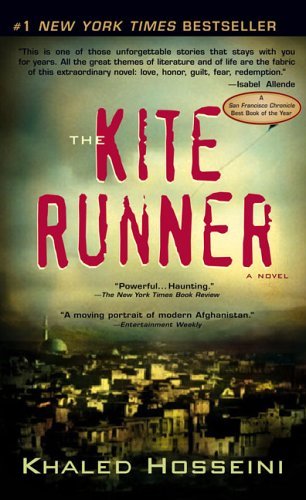
Review 20. The Kite Runner (Khaled Hosseini)
Read review
Khaled Hosseini’s The Kite Runner is, without a doubt, one of the best books I’ve ever read. Powerful, gripping and also downright shocking, you just won’t be able to put it down.
The setting is split between war-torn Afghanistan, specifically around the time of the Soviet Union invasion in 1979 and then the emergence of the Taliban in the late 1980s, and San Francisco (1981-2002). Hosseini expertly demonstrates the contrast in Afghanistan (largely Kabul) pre and post 1979: music, flowers in the streets, kites flying, good food (and fresh naan!), compared to a land of rubble and beggars, with soldiers and tanks in the streets. ‘Returning to Kabul was like running into an old forgotten friend and seeing that life hadn’t been good to him, that he’d become homeless and destitute.’
The central character is Amir, a guilt-ridden child brought up during the 1970’s in Kabul. His guilt is centred around a pivotal scene in the story: a tragic sexual assault on Hassan, who is his Hazara servant, and also his best friend since birth.
I’m sure I’m not alone in taking an initial dislike to Amir; at the zoo, hurling the pebble at a bear when no one was watching, his treatment of Hassan and his automatic assumption that he is superior because he is a Pashtun. Really he seems to be little more than a spoiled brat. ‘There was something fascinating – albeit in a sick way – about teasing Hassan,’ he says at one point, which he does in various ways such as showing off through reading, as he knows Hassan doesn’t understand. He then, through guilt, gives Hassan some of his broken toys or old clothes, which is deemed (by Amir) to be a suitable recompense for such ill treatment.
It’s his guilt which saves Amir from being a true villain, which of course increases immeasurably following Hassan’s assault, which he watched from a safe distance. ‘I may as well have taken a knife and carved those lines myself,’ he says, referring to the dishevelled appearance of Hassan in the months afterwards. ‘Everywhere I turned, I saw signs of his loyalty, his goddamn unwavering loyalty,’ – referring to Hassan attempting to go about serving Amir as normal. But eventually, when he can’t stand the guilt any longer, he frames him in a theft which leads to Hassan and his father Ali leaving the house.
Outwith the assault however, Amir and Hassan’s friendship is beautiful. From their tree carving as young children, ‘Amir and Hassan, the Sultans of Kabul,’ Hassan’s letter years later, ‘If you do [return to Kabul] you’ll find an old faithful friend waiting for you,’ and of course the most memorable line from the book, ‘For you a thousand times over,’ when Hassan runs the kite for Amir, it’s clear they have a special connection. ‘I watched Baba’s car pull away from the curb, taking with it the person whose first spoken word was my name.’ When Hassan and Ali are leaving, you really want Amir to confess (he even considers it briefly) and perhaps everything could have been different.
Any psychiatrist would likely have a field day with the relationship between Amir and his father (Baba) and this perhaps gives some justification to Amir’s failings. ‘Most days I worshipped Baba with an intensity approaching the religious. But right then [when Baba avoids reading Amir’s story] I wished I could open my veins and drain his cursed blood from my body.’ Amir has a deep craving for validation from Baba and resents Hassan because Baba treats both boys as equals, despite Hassan being a Hazara. Of course we learn later that Baba has a dark secret: he had an affair with Hassan’s mother and the boy is indeed Amir’s half-brother. At the end of the book, Amir reflects that he and Hassan are the legitimate and illegitimate parts of Baba’s life respectively, and it’s not always clear which one he was proudest of.
There is a real sense of good and evil in the book, Baba representing the former and the loathsome Assef (Hassan’s attacker) taking up the mantle of the latter. Perhaps the best moment for Baba is when he risks his life to protect a young mother from the brutality of a Soviet soldier: ‘Tell him I’ll take a thousand of his bullets before I let this indecency take place … war doesn’t negate decency, it demands it, even more than in times of peace.’ He also inflicts strong moral values on Amir: ‘When you tell a lie, you steal a man’s right to the truth … better to be hurt by the truth than to be comforted by a lie,’ despite hiding the truth around Hassan’s paternity at the same time.
The power of Baba’s character: ‘When all six foot five of him thundered into the room, attention shifted to him like sunflowers turning to the sun,’ makes it all the more difficult to see his life eaten away by cancer: ‘His shoulder blade felt like a bird’s wing under my fingers,’ and it’s clear how his death affects Amir deeply: ‘Soon we’d have to leave too and for the first time ever, Baba would be alone.’ His character seems to represent both the morality and dignity of life and it’s left to Amir to carry on this legacy.
Assef on the other hand, represents the evil of the world, from his obsession with Hitler at an early age, the infamous stainless steel brass knuckles and his eventual joining of the Taliban. ‘When I looked into them [Assef’s eyes] the façade faltered, revealing a glimpse of the madness hiding behind them.’ It’s such a chilling moment when at Amir’s 13th birthday party, poor Hassan has to serve him drinks and Assef kneads his chest, knowing he has inflicted a terrible sexual assault.
If I dare to critique anything in Hosseini’s masterpiece, there were two events that seemed somewhat unnecessary to the story: the return of Sanaubar (Hassan’s mother), which we only hear about through Amir’s loyal friend, Rahim Khan, and the attempted suicide of Sohrab (Hassan’s son). Both did not seem to add anything, in my modest opinion, and the story would have excelled just as perfectly had they not been included. It also felt slightly impractical that, following Sohrab’s just revenge of impaling Assef’s eye with a marble using his slingshot, he, Amir and Farid are able to easily escape to Peshawar without further run-ins with either Assef’s guards or other members of the Taliban.
In any case, the book is undoubtedly a piece of literary magic and will certainly stand the test of time. There are so many moments of deep and impactful writing, but I have selected the following two to conclude: ‘I wonder if that was how forgiveness budded, not with the fanfare of an epiphany, but with pain gathering its things, packing up and slipping away unannounced in the middle of the night,’ when Amir finally starts to feel he can move on from all that happened. And, ‘Hassan slumps to the asphalt, his life of unrequited loyalty drifting from him like the windblown kites he used to chase,’ when the life of the innocent, but doomed character of Hassan tragically ends. The writing creates deep and profound thinking, which is so desperately needed by all of us, especially in today’s troubled world.
Review 19. Treasure Island (Robert Louis Stevenson)
Read review
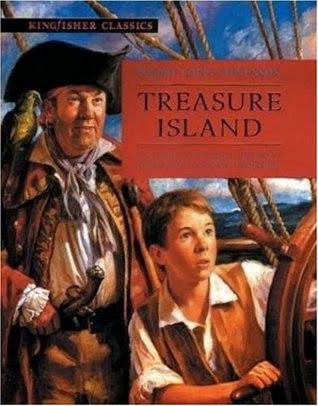
Treasure Island tells the story of the adventure-hungry Jim Hawkins who, after meeting the swarthy old pirate Billy Bones in his father’s inn, becomes involved in a dangerous hunt for treasure, previously hidden by the terrfiying Captain Flint. After securing a map from the deceased Billy Bones, Jim enlists the help of Dr Livesey, Squire Trewlaney, Captain Smollet and the mysterious Long John Silver to first find Treasure Island and, subsequently, the treasure itself. But when the crew mutiny, Jim has to decide who is friend and who is foe, as well as step up to face the many dangers associated with ‘Flint’s Fist’ which initiated the dark and deadly adventure.
This is such a magnificent piece of work, with the power to get the adventurous juices flowing in even the most reserved of individuals. There really is a bit of everything: pirates, sailing to unknown destinations, skirmishes, buried treasure; what young teenager wouldn’t give anything to be in the position of Jim Hawkins when he realises he is about to embark on his exciting, seafaring experience?
I remember my dad reading this to me when I was maybe 5 or 6 and then struggling through it myself for a few years afterwards. Of course I didn’t understand all the words but I didn’t care. I was well and truly hooked. Age is utterly irrelevant for this timeless story and it’s particularly interesting to come back to it as an adult and digest various parts of it with a more mature mind. The motivations for human betrayal, the brutality and violence associated with the times and the respectful nature of ‘The English Gentleman’ to name but a few. Treasure Island has inspired countless adaptations and other stories too but I’m confident its originality will stand the ultimate test of time.
The terror (and strangely associated excitement) which must have been brewing in Jim and his mother when they returned to the Admiral Benbow with the knowledge that the pirates were coming always stuck in my mind. Not to mention the bravery of the mother too when no-one else was willing to support them. In a similar way, the scenes where Jim had to single-handedly deal with Israel Hands (albeit intoxicated) aboard the Hispaniola were especially captivating to me as a reader.
The 18th century English-style ‘charm’ comes across strongly in this novel, particularly through the noble character of Dr Livesey and the bungler-like Squire Trelawney. The former’s wig, the way he coolly reprimands Billy Bones when he tries to attack him, his nonchalant manner in providing medical attention to the pirates following the attacks at the stockade are all very distinctive aspects. The latter’s character is worryingly akin to many powerful English figures today, particularly those who have somehow found their way into politics.
The narrative character of Jim Hawkins is of course the one which is described in most detail through the book, although there is a clever narration switch to Dr Livesey to cover the periods where Jim has embarked on his solo adventures. The part where Jim flees the Hispaniola to explore the island reminds us that despite all that has happened, he’s still only a child and is highly susceptible to rash and impulsive acts. Captain Flint, who doesn’t actually make an appearance in the novel, is conveyed as utterly terrifying and we are allowed to draw our own interpretations of what he must have been like. How fascinating is the marooned character Ben Gun, driven to the brink of insanity due to his predicament and his craving for a good bit of cheese! And of course Long John Silver, who is ultimately a dangerous criminal with sufficient intelligence to insight revolt and lead others, is clearly a pivotal part of the story. There is something quite charming about the genuine affection he has for Jim, despite their being on opposite sides of the fray.
So all in all, this is a must read for every age and parents should feel a responsibility to instil some of the magic into their children and allow it to flourish accordingly. Yes, there are powerful messages in morality but most importantly there is calling to their inner adventurer. They must be allowed to lose themselves in this swashbuckling story. Writing this short review had made me want to read it again!
Review 18. The Catcher in the Rye (J. D. Salinger)
Read review
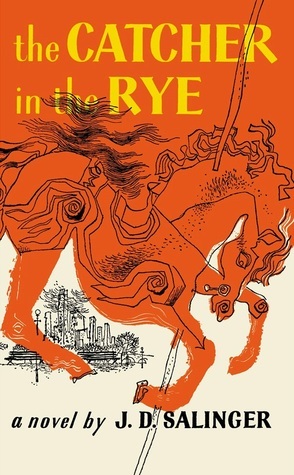
The Catcher in the Rye is the timeless story of troubled Holden Caulfield who has flunked another prep school at the age of 16 and is being kicked out. Rather than heading home to face his parents, he goes to New York for a couple of days, where he gets involved in various scenarios which divulge to the reader that he is in a poor mental state. Much of this is down to the death of his brother Allie several years earlier, which Holden hasn’t been able to deal with.
As things stand, this is my favourite book of all time. It really is such a rare work of genius. I love the character of Holden (red hunting cap and all!) – his personality, his complexity and the way he seems to think he has everything in life figured out when in reality, nothing could be further from the truth.
Despite being a relatively short book and the fact that it spans such a brief period of time, I was really drawn into sections where Holden seemed completely lost and it felt like he had been in New York for much longer than just a few days. In addition, the setting of New York in the late 1940s is captured brilliantly. Holden’s ‘adventure’ of being alone and trying to figure things out was continuously gripping to read and had a bit of a dream-like feel to it, one which was temporarily snapped back into reality when his parents almost caught him visiting his beloved little sister Phoebe.
The language Salinger uses in Holden’s dialogue such as Goddam, crumby, corny, ‘that killed me’, ‘very big deal’, ‘what knocks me out’ or ‘I got a bang out of it’ creates such a real character and it feels like you get to know him intimately throughout the book. I love how he refers to people as phonies when he either doesn’t like them or at least certain traits of their character. Usually it seems like he really hates them, but more often than not, he ends up feeling sorry for them in some way.
Despite being published almost 80 years ago, the book is still so relevant to today’s world. The pressures on teenagers at school, individuals trying to struggle on their own through aspects of depression and the impact of significant or tragic events in children’s lives are really the main themes at play. Holden’s reflections on his late brother Allie are both poignant and real and it’s endearing to follow his thoughts and understand how the loss has deeply affected him. ‘All the visitors could get in their cars and turn on their radios and all and then go someplace nice for dinner – everybody except Allie.’ – recalling the funeral.
We are certainly given regular (and worrying) glimpses into Holden’s state of mind: ‘What I did, I started talking, sort of out loud, to Allie.’ ‘I swear to God I’m crazy. I admit it.’ ‘Depressed the hell out of me.’ ‘I almost wished I was dead.’ ‘What I really felt like though, was committing suicide.’ ‘I started picturing millions of jerks coming to my funeral and all.’ Of course this is far from surprising as, in addition to the trauma of losing his younger brother, it’s revealed that other past experiences have clearly caused him damage: ‘That kind of stuff’s happened to me about twenty times since I was a kid.’ – when his former teacher Mr Antolini pats him on the head when he’s sleeping (which Holden interprets as sexual abuse). ‘There was old James Castle laying right on the stone steps and all. He was dead, and his teeth, and blood, were all over the place, and nobody would even go near him.’ – when he recalls a bullying victim taking his own life in his former school.
Holden may be a troubled character, but he regularly displays signs of real maturity which is one of the reasons why we as readers hope he can work things out and have some kind of happy and fulfilling life. ‘Goddam money,’ he says. ‘It always ends up making you blue as hell.’ This is when he feels bad about not giving the nuns more money than he did (which they most likely wouldn’t have accepted anyway). ‘What really knocks me out is a book that, when you’re all done reading it, you wish the author that wrote it was a terrific friend of yours and you could call him up on the phone whenever you felt like it.’ What a terrific view from a 16-year-old, which I’m sure us reading enthusiasts must all echo.
It’s impossible not to form a warm attachment with Holden – his aspirations of wanting to be ‘the catcher in the rye’ (to prevent children falling off a cliff), which he first starts thinking about when he sees the little boy playing at the edge of the road, apparently unawares by his parents. A deeper meaning to this may be that he wants to stop children reaching adulthood so they can retain their innocence and not be exposed to all the evil in the world. His concern for the well-being of the prostitute, his anger at obscenities being written in the school playground – these and other points strongly highlight his ultimate well-meaning in life. As a reader, you probably want to be the one to tell him that everything’s going to be okay and give him a platform to just express what it is that really seems to be bothering him. And of course, I’m sure I’m not alone in desperately wanting to know what happened to him afterwards. We are given some hints that he went on to receive professional help, but how did it work out? Of course it could well be a blessing that Salinger leaves this open to the reader’s imagination.
The novel is filled with so many touches of writing magic – Holden’s unanswerable questions such as where the ducks go in the winter, his pretence scene around being shot in the guts by old Maurice and a childish attempt to chat up his school colleague’s mother, to name just a few. As Holden’s mental state escalates towards the ‘end’ of the novel, the fact that there is no climax as such, beyond Holden feeling temporarily happy again as he watches his sister on the carousel, doesn’t really matter. The book is a must read for anyone – a few pages is all it will take to become hooked.
Review 17. Birdsong (Sebastian Faulks)

Read review
Some crime against nature is about to be committed. I can feel it in my veins.
Faulks has created a masterpiece in the form of Birdsong, which gives a tragic and profound account of the character Stephen Wraysford, as he navigates his way through the maddening and devastating events of the Great War. Stephen is a resilient and deep-thinking British soldier on the Front Line in Amiens (Capital of The Somme). Other main characters include the gentle Jack Firebrace (a tunneller) and strong-willed Elizabeth Benson (Stephen’s granddaughter), who features in a separate time-line of the novel and has a powerful yearning to find out more about the grandfather she never met.
Faulks clearly sets out to differentiate his novel to other works which delve into the highly reported subject of the First World War. By way of introduction, he openly discusses the extensive research he put in before writing, including visits to some of the regions he vividly describes in the text. He felt everything around him was begging for inclusion in the book. The tunnellers (or sewer rats) provide the extra dimension for Faulks to great effect. Jack Firebrace lay 45 feet underground with several hundred thousand tons of France above his face. Is there anything more terrifying than the claustrophobic conditions these young men had to endure?
In addition to the tunnelling accounts, Faulks does not shy away from the graphic and barbaric details associated with the war. Rats played and feasted on the unrescued corpses; within two hours they had blown Byrne’s head bit by bit off his body so that only a hole remained between his shoulders; part of his intestine lay slopped out on the scooped soil of the shell hole where the sun began to bake it; his body was decomposing as he lay there like those that hung on the wire going from red to black before they crumbled into the earth leaving only septic spores; his friend blown into pieces, each the size of a leg of mutton, put into in a sandbag to bury. It is difficult for the modern-day mind to contemplate such butchery, whereas for the cursed soldiers, many of them younger than 20, it must have been the norm. Each day they knew that a direct hit from a shell would obliterate all physical evidence that a man ever existed or at least reduce them to particles so small that only the wind carried them. It’s no wonder that death was preferred to grievous injury as Stephen indicates when he sees a 19-year-old in hospital suffering from a gas attack.
A major theme in the novel is the trauma endured by the soldiers both during the conflict itself and for the remainder of their lives (if they were able to survive). We now know that the emotional effects of the war were poorly understood at the time and so many individuals were left to spiral freely into uncontrollable states of despair. Faulks displays this exceptionally through the character of Captain Weir – an officer close to Stephen who was eventually killed by a German sniper. His dishevelled appearance and inability to talk sensibly until the liquor had put some sense and reason in him concerned the new subaltern, Ellis, who also felt he looked too old to be crawling underground with explosive charges, especially in those trembling fingers. Stephen eventually warms to Weir, explaining to Ellis that he’s not afraid of gas or shells or being buried. He’s frightened that it (the war) doesn’t make sense, that there is no purpose. Stephen also indulges Weir’s superstitious nature by reading his fortune with cards (though he always fixes things to ensure a positive result).
There are other poignant examples of these emotional effects such as Brennan recovering the rotting corpse of his brother from no-mans land. All night he sang for his brother whom he had brought home in his hands. Jack Firebrace attempts to shine light in the hearts of his comrades through jokes and signing. If they could shout loud enough, they might bring the world back to its senses, they might laugh loud enough to raise the dead. But inside his own soul is dying slowly. Faulks brilliantly conveys the mental state of the soldiers through their deluded and troubled thoughts: no inferno would now melt them, no storm destroy them, because they had seen the worst and survived; the unexpected bullet through the head made a quiet, relatively clean death but it was demoralising to the nerves of the others; the half-hearted shelling was like a routine metal lullaby to warn the forgetful that death could come to them even in sleep. When the hospital nurses attended to the soldiers in their direst moments they said, he’s shouting for his mother…they always do.
The comradery displayed through the soldiers, with Faulks as a conduit, is truly remarkable and again something which the modern-day mind is unlikely to comprehend. Weir insists on re-entering the treacherous tunnels when an enemy explosion claims the lives of his men in a desperate but unsuccessful attempt to save them, Jack attempting to do something similar in the lead-up to his own death. It is such a beautiful moment when Stephen promises to have more children for Jack when the latter knows he will never be able to himself. The unavoidable close quarters of the soldiers force them to become a family: he (Jack) slept as well with him as he ever had slept in London with Margaret; they disliked each other’s habits but they were familiar with them and feared worse. Stephen goes on to declare that his main motivation for carrying on with the war is to fight for those comrades who have died.
It’s clear that Faulks shares the view of countless other students of the Great War – why was one of the greatest massacres in human history ever allowed to happen? Why were 60,000 allied men (in a single day) allowed to march to their deaths on the Somme where even the opposing side were appalled at what they had done? Desperation, pride, arrogance? Colonel Gray tells Stephen: the wire isn’t cut you know, I don’t want you to tell your men. He also tells him he doesn’t need advice from a platoon commander. Both things suggest there were men who envisioned at least part of the annihilation which took place. There is an eerie scene where Weir visits his parents in England during leave and it’s made clear that his father doesn’t want to hear any details around the war beyond what he has been provided by propaganda. It highlights that so many prefer to live in ignorance of the painful realities in the world – a theme which is unfortunately still present in today’s society.
Faulks cleverly uses the character of Elizabeth to explore some of the thoughts and feelings of the reader. Before the war, Stephen had an affair with Isabelle Azaire during a business visit to France, eventually causing them to run away together. Isabelle left two step-children behind which she felt remorse for, however her husband had been abusive and cruel to her. She soon became pregnant with Stephen’s child (Elizabeth’s mother, Françoise) but left him before he had any knowledge of it. She later returned to her husband, René Azaire, through negotiations of her father, but eventually tried to raise her child with a German soldier who she met when her city was occupied. When she dies of poor health, the child was sent to her sister Jeanne, who in the meantime has fallen in love with Stephen. Perhaps rightfully so, Françoise is reunited and raised with her real father, Stephen, and Aunt Jeanne. Elizabeth is only informed of this from her mother Françoise at the end of the novel.
The 38-year-old character of Elizabeth is leading a somewhat broken life and having an affair with a married man. Inside, she suspects she’s chosen this man because he’s unattainable and she won’t have to sacrifice her own freedom. She also develops a need to find out more about the Great War and her grandfather because she thinks she may never have children of her own. She carries out some research including decoding her grandfather’s diaries (provided by her mother), visiting battle locations in France and meeting with aged survivors who fought alongside Stephen. When she eventually becomes pregnant from her affair, she has already established a connection to her grandfather through her research.
Along with providing a fantastic account of such a devastating but important subject, Faulks really creates some touching moments in Birdsong which are unlikely to ever be forgotten by the reader. Possibly the main one is when Elizabeth declares her newborn son is to be called John, satisfying the promise made by Stephen to Jack before he dies. But when Jack reads the letter informing him his young son has died, this is also particularly tear-jerking. The build-up is so beautifully done, where Jack doesn’t read the letter immediately, believing he would rather not know in case he is killed first himself, and when he finally does read it, willing his eyes not to glance further ahead. Elizabeth realising the names on the monument in France are just those of men who were never found and the letters sent by the soldiers to the parents before the doomed assault on the Somme were also remarkable accounts. Finally, the embrace between Stephen and the German solider, Levi at the end of the war, in addition to them placing Levi’s brother and Jack in a joint grave is so poignant. It hopefully makes it clear to the reader that the allied and enemy soldiers are one and the same, merely following the orders of supposedly wiser men.
If possible to offer any critique to the masterpiece of Birdsong, it might have been even more effective to keep the reader in the dark about Isabelle being pregnant with Stephen’s child until he first met with Jeanne, however this would likely have been complicated with the parallel storyline of Elizabeth. Stephen also describes during some of his darkest moments of the war that he can hardly remember the look of Isabelle’s face but later relays her features in detail when he compares her to Jeanne.
In conclusion, Faulks has created a fantastic reference point for anyone interested in finding out more about the tragic events of the First World War. We all live in the hope that future generations understand those who fail to study history are doomed to repeat it. After reading Birdsong, there will perhaps be feelings of sadness, anger or curiosity in the reader. Or maybe there will be a feeling of emptiness, akin to the quiet when the guns had stopped and the soldiers heard the song of a blackbird.
Review 16. Man and Boy (Tony Parsons)
Read review
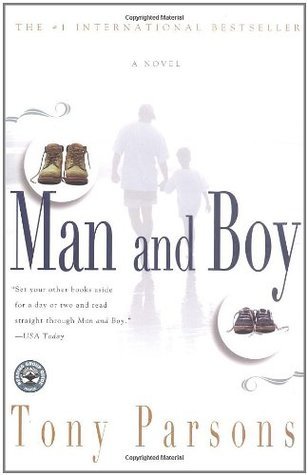
For me this book was a thoroughly great read and I just didn’t want to put it down until it was finished. Well written and engaging, there were so many poignant moments but in addition, there was a scattering of laugh-out-loud parts too.
The story around his father’s funeral and the realisations it brought out in Harry were superb and highly in touch with reality – so many readers will be able to identify with such an unfortunate and inevitable part of life. The journey he goes through with his young son which ultimately leads his unselfish decision to allow his ex-wife full residency was highly touching and this will resonate strongly with any fathers out there, especially ones with broken families.
There is a kind a sadness associated with the book around the fact that modern life seems to be so tolerant of married couples giving up on each other, with children often being the main victims as a result. It may seem obvious but if couples were able to see the negative impact brought upon children from separation, surely they would think twice about having them in the first place – at least until they are reasonably sure they are able to make a life together first.
Harry does succumb to adultery in the form of a one night stand at the start of the book – an action which might automatically cause the reader to believe that he deserves everything he gets. However it is pretty much impossible to maintain such a feeling as we unravel his character through the story. His moral and often unselfish behaviour on multiple occasions is highly admirable. This is also supported by the fact that his wife Gina really did seem to be looking for any excuse to get away from things and live her own life.
In summary, a highly enjoyable but also important read for anyone who might be considering giving up on their family. Furthermore, well worth reading for couples who have not yet brought children into the world.
Review 15. Robinson Crusoe (Daniel Defoe)
Read review
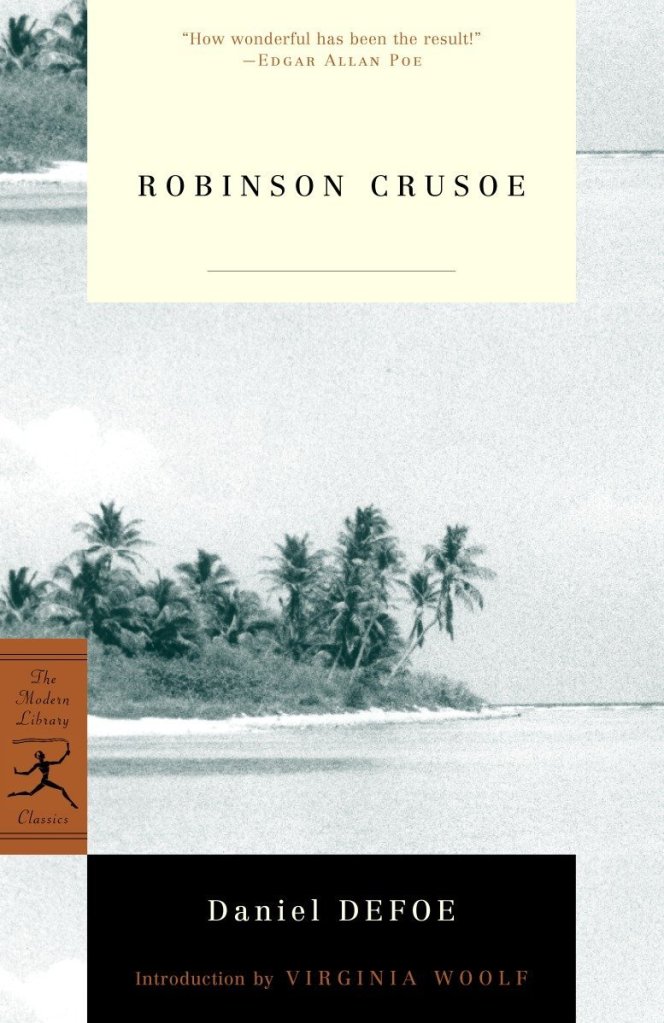
It’s difficult to know where to start when it comes to reviewing a book as exceptional and famous as Robinson Crusoe. Highly intoxicating and consistently exciting, it really is a hard one to put down. The obvious attraction is a secluded, secret world, miles away from anyone; of course it’s quite a while before the protagonist sees things this way.
I won’t dwell on the obvious links to British imperialism and religion, however it’s worth touching briefly on the latter, as the development of Crusoe’s views throughout the novel is an important theme. He does what so many others tend to find themselves doing in life: praying to God when they’re desperate and forgetting about religion completely when things are going well. For Crusoe this changes though, especially when he recovers from malaria, and describes coming to a ‘true sense of things’, where finding deliverance from sin is a much greater blessing than deliverance from affliction. It’s noteworthy how he feels it so important to teach his man Friday about God, clearly demonstrating that Crusoe is a God-fearing man himself. This is also shown when he explains his reasoning for not murdering the cannibals outright.
It’s important to bear in mind however, that the novel was first published 300 years ago, where life could be perceived as being much simpler than it is today. Treasure Island, which has some obvious similarities, was published some 160 years later and many other interpretations followed, such as Castaway in 1983. The fact that so many interpretations exist (adaptions of Robinson Crusoe itself and other inspired stories) supports the belief that Defoe’s account was the ‘first English novel’.
The appeal of Crusoe’s situation, which at first seems unenviable, is interesting, following the acceptance of being marooned, the creation of habitation and the formation of a sustainable food supply. How many people in today’s world would secretly love to be trapped away from life and all its associated problems? ‘It was the first gun that had been fired there since the creation of the world’ and ‘no human foot had ever set upon that place’ were phrases used by Crusoe to really bring out the sense of isolation on the island. When he has established his country house and sea-coast house, as he refers to them, it’s like he’s the richest man in the world and even calls himself King of the island.
There is a real charm to the character of Crusoe, with his traditional and honest views. He clearly has a passion inside him to follow his dreams, despite any advice to the contrary. Many would argue this is an admirable trait as opposed to a flawed one, even after the setbacks of the initial scare at sea and his subsequent capture by pirates. He talks about a lack of evil on the island, where things like greed are absent because there is no need for any more produce than a single man can use. He also has an ample supply of gold and other coins which of course are no use to him whatsoever. Crusoe demonstrates the most remarkable abilities in problem solving, making what he can from such limited resources. It’s such a beautiful moment when the corn seed takes root in the ground and he realises he’s able harvest a new supply. This is another occasion where he expresses his thanks to God for allowing such a wonderful thing to take place.
The mental aspects of being secluded on an island for 24 years are clearly something which Defoe gave great consideration to when writing the novel. ‘Loneliness is the enemy of most humans’, a statement which has arguably stood the test of time. He describes Crusoe breaking into tears on numerous occasions in the initial years of his being marooned, when hopelessness seems to be flooding his mind. His desperation to see another human being (that isn’t one of the cannibals he encounters later) is endearing, as is his joy when he finally rescues his man Friday. ‘I began now to have some use for my tongue again which indeed I had very little occasion for before.’
It’s interesting how he craves being back on the island when almost carried out to sea in the canoe, demonstrating once again the importance of perspective and Crusoe’s view on God’s will. Defoe is able to draw readers into imagining themselves in Crusoe’s place to such fantastic effect and wishing to be back on the island in the face of certain peril is just one example. The terror of being desperately sick with no-one around for comfort is another. It really would have been a terrible thing for him to have died alone on the island and never be discovered, like the old goat he found later in the cave. When he first discovers the footprint on the island which isn’t his own, the terror he feels is something the reader can strongly identify with: the feeling of a perfect world crashing down around him.
The practical aspects to being stranded on an island for 28 years (24 in complete isolation) can boggle the mind, but it’s another thing which Defoe clearly gave much consideration to when writing the novel. For example, having Crusoe captured by pirates and then establishing his plantation in Brazil before being stranded on the island was a clever way to equip him with experiences which were valuable later on. Many readers will try and imagine themselves cutting down trees and attempting to carve them into canoes with limited equipment. It would be interesting to know how Defoe came up with the timescales for each of Crusoe’s tasks! The thankfulness Crusoe expresses to God for being able to salvage critical items from the ship when he is first trapped on the island also comes across strongly. When he first makes the large canoe and then has no way to move it to the shore, he is highly critical of himself for being foolish, however it is easy to identify with the concept of doing part of a task first and worrying about the rest later, particularly when so excited by the overall concept that the mind is clouded with proper reason.
Defoe conveys many important life messages through the character of Crusoe. In particular, he tries to show that the ‘middle-class’ in life are the happiest; ‘somewhat detached from the toils and labours of the poor, but kept grounded by the need to make their own way in the world’. Of course ‘the fate of young heads’ as he puts it, is that they are never satisfied with their stations. ‘It is never too late to be wise’ Defoe adds, suggesting that there is hope for these ‘young heads’ as they inevitably mature. When Crusoe first sees the footprint in the sand, he immediately increases his fortification on the island but recognises soon afterwards that fear causes individuals to act irrationally, as he realises the chances of him being discovered after so much time are very low. And when the ship approaches the island, which ultimately ends up being his saviour, he holds back at first, allowing him to discover it’s filled with dangerous mutineers. ‘Let no man despise the secret hints and notices of danger which are sometimes given him’ he states wisely.
If it’s possible to pick out any negative aspects to the magnificent work of Robinson Crusoe, the short adventures with the wolves and bear following Crusoe’s escape from the island, seemed slightly unnecessary. In particular, the scene with Friday and the bear felt pointless and cruel. However, to comment negatively on any aspects such as animal cruelty, religion, slavery and imperialism doesn’t feel wholly justified given when the novel was first released. It might have been better to end with the short account of how Crusoe established his affairs in the outside world and left it at that. The second shipwreck encountered by Crusoe when he was on the island also felt unnecessary. Most of all, it was quite surprising to find him leaving the island with the new captain before awaiting news around the Spaniards which he had sent for via Friday’s father.
All in all, this is a must read for anyone who craves adventure, unlimited by their imagination. The charm and messaging in this work has already stood the test of time and will continue to do so for countless generations to come.
Review 14. Bad Blood: Secrets and Lies in a Silicon Valley Startup (John Carreyrou)
Read review
As someone who actively works in the area of pharmaceutical research, I read John Carreyrou’s account of Elizabeth Holmes and her doomed blood-testing company with plenty of interest. I was quite familiar with most of the technical aspects described and have even worked with some of the companies which were involved, either as investors or equipment suppliers. Although it’s not my direct area of expertise, the concept of 70 different blood tests with a single finger prick seems ambitious, to say the least, but if achieved would be revolutionary, which I guess is part of the reason why Holmes was able to draw so much attention and achieve the ill-gotten successes that she did.
To give a brief summary, Holmes was a Stanford drop-out who, along with her boyfriend, Ramesh “Sunny” Balwani, developed the alleged game-changing technology for blood testing, their company Theranos (founded in 2003) worth a staggering nine billion dollars at its peak. However the technology fundamentally did not work as promised, leading to significant inaccuracies and putting patients at risk. John Carreyrou, a journalist for the Wall Street Journal, began investigating Theranos in 2015, uncovering the truth behind it’s claims. Holmes was convicted in 2022 on multiple counts of fraud and conspiracy.
Some of the facts that Carreyrou describes are mind boggling, in particular, Holmes’s net worth of over 5 billion dollars at one point, due to her owning just over half the company. To me at least, it begs the question of motivation – what were Holmes and Sunny actually in it for? Just the money/fame? I strongly suspect not. If that was the case, surely they could have cashed in at any point (at least before the tide started to turn). Did they actually believe in their concept and were just fooling themselves? I suppose this could be a valid theory. But with so many credible counter arguments coming their way, surely some doubt would creep through eventually? What if they knew deep down that their technology was fundamentally flawed but the wave they were riding was just too intoxicating? It was ok if the technology didn’t really work because they were still receiving all the kudos associated with a major, world-changing breakthrough? Or, at the end of the day, maybe they were just in it too deep and figured it was impossible to claw things back.
Whatever their motivation, they certainly seemed to be enjoying the ride. Holmes and Sunny’s insistence on their various security measures did seem to suggest that they loved feeling important. Bullet-proof office windows, bodyguards in dark suits referring to them as Eagle 1 and 2, being chauffeured around in their plateless, black Audi A8 Sedan and city-hopping in their private gulf stream jet. They were obviously trying to create an impression that they were bigger than they actually were.
In spite of everything though, it’s difficult not to admire the abilities of Elizabeth Holmes. A Stanford drop-out who went on to build a 5-billion-dollar enterprise from a Silicon Valley start-up must have some remarkable abilities. Carreyrou does cite some of these; her sales skills, presentation techniques, ability to get across her ideas and leverage funding, to name just a few. It is suggested at one point that she has some of the characteristics of a sociopath but I would be uncomfortable jumping on board with this. Carreyrou does seem to overly highlight some of her personal traits such as a deep voice and hypnotic eyes but I’m not sure how relevant this is or whether it needed to be emphasised so much.
Focusing on Sunny (Ramesh Balwani) briefly, he does seem to be portrayed as the ultimate villain by Carreyrou. There is even the suggestion that he was the one behind much of the deception and was manipulating Holmes to an extent. Of course it’s highly unlikely that Holmes is innocent of any wrongdoing. The chants which Sunny was described to have led such as, ‘fuck you Carreyrou…’ and so on, remind me of scenes with Leonardo DiCaprio in the movie The Wolf of Wall Street but not in a funny or inspirational way. Then there’s the instances where Sunny fires people who stand up to him or Holmes, in many cases frogmarching them immediately out the door, which are quite shocking. In particular, I found his statement to Tyler Shultz (key whistleblower and grandson of George Shultz, former Secretary of State) ‘I have spent an extraordinary amount of time postponing critical business matters to investigate your assertions’ quite disturbing. This was when Tyler started to realise that all was not what it seemed at Theranos.
Of course it wasn’t just Sunny that was the problem. The Frat Pack concept introduced by Holmes’s brother Christian was utterly ghastly and HR stating things like ‘we have ways of tracking that’ (referring to staff activity on LinkedIn, Facebook etc) seemed eerie and unnerving. I liked the description of working at Theranos as being like trying to build a bus while you’re driving the bus. So many others things stuck out for me too like the creation of roles which were lofty and vague (to cover up deficiencies), the Lab Director, Alan Beam, being denied access to quality control data whilst still being responsible for it, experiments being discarded and repeated until the desired result was obtained and the deliberate siloing of information between colleagues to pick out a few. One example of siloing was the engineers Daniel Young and Xinwei Gong (Sam) who had no knowledge of patient care but had the mentality of ‘as long as their bit was done, that was all they cared about.’ All of these things screamed out one thing to me: bad leadership.
I did find some of Carreyrou’s writing quite irritating in places though. In particular, he tended to overuse individual, physical characteristics when describing people, I assume to make them stick in the reader’s mind. In addition to Holmes, things like ‘Daniel Young had a long forehead accentuated by a receding hairline that suggested a big, powerful brain’. There was also a level of detail which sometimes seemed too much, like the tension between Holmes’s parents and the Fuisz’s getting down to things like arguments sparked by a comment about a necklace. It was just too personal for me. I think it would have been sufficient to just highlight the tension was there and move on. Similarly, things like Ian Gibbons ‘doting on his dogs Chloe and Lucy and his cat Livia’. What was the need for this level of information? I also disliked the part when Carreyrou said ‘I got the distinct impression that her (Holmes’s) display of contrition was an act’. This may have been the case but it gave me the impression he was dictating that the reader should automatically follow suit, regardless of their own opinion. Furthermore, I really disliked the part where Carreyrou stated ‘I cajoled him into releasing the whole inspection report.’ Whilst he may have played a vital part in exposing the foul play of Theranos, this gives the impression of a hard, conscienceless reporter who would stop at nothing to get what they wanted.
Of course one of the biggest revelations in the book is the high profile supporters Holmes seemed to dupe so easily. Henry Kissinger (renowned US Secretary of State and National Security Advisor), Rupert Murdoch (media mogul), George Shultz, Don Lucas (venture capitalist and former Director on the boards of Oracle and Cadence Design Systems) and Steve Burd (CEO of Safeway) to highlight the main ones. Ethically, they must share some of the blame for the level of deceit surrounding Theranos. Shultz siding with Holmes over his grandson, Tyler was particularly troubling. Also, when Avie Tevanian called Holmes out to Lucas, fully expecting support, it was shocking that this was thrown back at him, causing Avie to eventually resign. ‘The fear of missing out was a powerful deterrent’ – this statement was used to try and explain the apparent dedication of Burd but possibly there was something to this for the others too. Carreyrou repeatedly highlights Holmes’s closeness with the figures listed above, particularly Shultz, but I’m not entirely sure what is being insinuated. I guess the fact of the matter is that eye watering investments were lobbied to a fraudulent organisation from all these individuals over a significant period of time.
It’s definitely worth highlighting the part about Ian Gibbons which is one of the most powerful aspects of the book. His tragic story is a stark reminder of the importance of superiors considering the mental health of their staff. Piling on pressure without even realising the impact on whoever is being forced to bear the brunt will eventually cause a tipping point. It is such a heartfelt moment where Gibbons appears to be making a silent cry for help when going for lunch with one of his colleagues but doesn’t quite get the chance. Whilst his story is the most tragic example, the impact of the Theranos brutality on other individuals is highlighted too. ‘The proud and pugnacious former CIA agent broke down and sobbed’ – a powerful statement describing Richard Fuisz who also attempted to tackle Holmes. Moreover, Tyler Shultz, Erika Cheung and Alan Beam can only be described as heroes, each of them willing to sacrifice their careers and the prospect of financial/reputational ruin because ethically they knew what Holmes and Sunny were doing was wrong.
In summary, Carreyrou has provided a fascinating overview of the rise and fall of Theranos. Much of the time his account reads like a thriller, particularly when he begins to describe his own personal involvement in bringing the murky details to light. Personally speaking and coming from a scientific research background, I’m all for being excited and proud of a new idea. But Bad Blood is a great (albeit extreme) example of the dangers of overpromising your concept to the world. How many steps are we away from being sucked into an enterprise like Theranos? Hopefully quite a few but it’s surprising how we can be blindsided by a stubborn commitment to something we are passionate about. Thinking once more about the kudos Holmes seemed to be relishing in at a relatively junior stage in her career, as Carreyrou nicely states: ‘there’s a reason Nobel Laureates in medicine are in their 60s when their achievements are properly recognised’. This is definitely something Holmes’s duped high profile investors should take the time to reflect on.
Review 13. A Thousand Ships (Natalie Haynes)
Read review
“The smoke was sinking into the streets, as if the city was now too ruined, too shamed to meet her eyes.”
Natalie Haynes has created a masterpiece with A Thousand Ships, really tapping into the devastation and sadness following the fall of Troy, in addition to the beauty and allure of our favourite stories from Greek mythology. A periodic narrator is provided in the form of the muse Calliope, who is guiding the Bard Homer (I assume) to replay the events centred around the female figures associated with one of the most famous wars in history.
At first I found myself wanting to dislike the novel, worried it would come across as too feministic and indeed early scenes such as the Trojan Queen Hecabe and the priestess Theano doubting the apparent Greek deserter Sinon about the true purpose of the wooden horse, the counsellor Antenor with his bitter betrayal and the constantly accurate predictions of Princess Cassandra almost confirmed my concerns. There was also the risk of the beloved Olympian Deities being portrayed via tiresome clichés or the highly accounted war itself being replayed with little or no sense of originality. But I needn’t have worried. Haynes had me hooked soon afterwards and it’s clear she has a genuine passion for both truth and myth alike.
The theme of the novel is the (mostly) heroic roles of the women (Trojan and Greek) and their progression following the aftermath of the deadly infiltration. The increasing frustrations of Odysseus’s wife Penelope as she awaits her husband’s return to Ithaca is a powerful strand and her disappointment when she finally gets what her heart desires is really quite moving. Queen Clytemnestra’s revenge is handled brilliantly. “You would walk on them if a God ordered it” she says to her husband Agamemnon when he questions why he has to walk over the tapestries as he returns from Troy. The silent shudder akin to Poseidon tapping his trident on the ground really seems to jump from the page! The primordial deity Gaia says to mankind “you must stop (reproducing), so that I can rest beneath your ever-increasing weight” giving the moral message, relevant to today’s world, that humans seem hell-bent on overconsuming the resources of Earth.
Haynes uses a combination of history and her own interpretation of events to build her novel and bring it to life. The chapters with the Trojan Women were perhaps my favourite, providing the harsh reality of what must become of a Royal household once their kingdom has been overthrown. Hecabe is a fascinating character who never seemed to lose her dignity and is justly granted her revenge from Odysseus for the betrayal and death of her son Polydorus. The impossible position of Princess Andromache, who has her baby (the son of Hector) wrenched from her arms and dashed on the rocks, is compensated only by the fact that she goes on become a new Queen (of Epirus) by marrying Cassandra’s twin Helenus and giving birth to her second son Molossus. In some respects, she created a new version of Troy elsewhere.
So many of our favourite moments are revitalised through Haynes. The creation of the bronze statue by the blacksmith for Laodamia to assist with the mourning of her husband, the fight between the Amazon Penthesilea and Achilles and the shamed Paris begging his wife Oenone for forgiveness to name a few. The sacrifice of Princess Iphigenia was replayed particularly well, overshadowing related accounts such as Colm Tóibín’s House of Names.
The strength of the novel is really in the writing where Haynes excels in so many ways. The chapter which sees Hecabe’s revenge on Polyester, written through Cassandra’s visions is powerfully done. The combination of descriptive language and imagery teases out the characters to great effect, bringing them beyond the mythological figures we have read about many times before. “Briseis and Chryseis metamorphosing from people into property: although the two women were taut, like bowstrings. They would not snap.” “He (Patroclus) had to extend his stride a little beyond its natural length to keep in step with Achilles.” “His (Amphinomus) face reminiscent of a dog caught stealing milk from a jug.” “He (Laodamia’s husband Protesilaus) looked more beautiful dead than he had looked alive, always gasping for breath.” The novel contains many sobering statements too: “Who could love a coward, she (Laodamia) had once heard a woman say. Someone for whom the alternative is loving a corpse.” “A soldier can’t fight if he’s dead on the ground.” “When a city was sacked, everything within it was destroyed, right down to its words.”
Lastly, there’s the wonderful deities, who are handled so magnificently by Haynes. She effectively takes us into what their minds might actually have been like, a great example being the spiteful Eris and her wandering vengeful thoughts which led to the trickery with the golden apple between Hera, Athene and Aphrodite. “She (Aphrodite) had the depth of a puddle formed in a brief rain shower.” The insinuation that Apollo was actually disguised as Paris when the fatal arrow was delivered to Achilles. Oenone the mountain nymph on mortals: “They had a strange smell – faint, when they were young, ripening to a stench as they grew old – but always present.” The odour she is referring to is death. The involvement of the Gods immediately before Laodamia’s death and following the obsession with the bronze statue of her husband was brilliantly replayed. The awe of these deities is just constantly kept alive with such fantastic turns of phrase. “The sun was riding his chariot past the distant ocean.”
Overall, A Thousand Ships is a must read, particularly for those who have a flair for these wonderful myths and ancient times. It may have seemed impossible, but my passion for them has actually grown since completing this work.
Review 12. The Young Team (Graeme Armstrong)

Read review
‘We’re on borrowed time always, wi every second stolen n destined for inevitable and painful failure but every moment ae it is pure electricity.’
Graeme Armstrong has created a masterpiece in The Young Team which tells the story of Alan (Azzy) Williams, who has grown up in a scheme in Airdrie, and the realities and consequences that come along with it. Azzy starts off as a troublesome, 14-year-old ned with something to prove and (perhaps surprisingly) ends up as a wiser, but also hardened, 21-year-old man with the mental and physical scars to prove it.
Readers may be put off by the sharp and jarring colloquial writing which is akin to Kelman in many mays, but I would urge those who are turned off to stick with it, otherwise they’ll be depriving themselves of a piece of literary magic. Armstrong’s own experiences are never far from the surface and the authenticity of drug addiction, depression and gang-related violence is alarmingly real. ‘If the lid is off when you get bottled, they smash and leave your face like a jigsaw. Lid on, they usually don’t burst.’
It’s hard not to warm to Azzy as the story is progressed. It’s clear he’s been caught up in a world he didn’t choose, despite his inner ambitions to become the leader of the Young Team. It just seems to be part of him, ‘that feeling that starts in yir chest and goes tae yir heid n brings the red mist doon’ and he’s unable to fight it. It’s mentioned several times though, that he never carries a knife because there’s also a part of him that doesn’t want to become a hardened criminal. As anyone who has a connection to Azzy’s world will know, there are always some bad eggs in these circles such as the drug dealer Maynard or Si’s brother Matty in the TOI. Unfortunately, there also tends to be the ones who aren’t strong like Azzy and able to survive. Toni-Marie and Finnegan are classic examples of this.
So many people today find it hard to offer sympathy towards troubled youths like Azzy and can only look with scorn on such society, failing to acknowledge its cause or existence. The head teacher’s character, Mr McGiver, is one of the few people who understand it, and his efforts to help Azzy (who he always sees potential in) are truly admirable.
The thoughts and feelings described by Armstrong through Azzy are expertly effective and pull us into their world whether we want to go there or not. ‘The adrenaline gives yi that sick makin dancin feeling in yir stomach that yi come tae love n dread simultaneously.’ Here he is referring to the moments before a YT-TOI skirmish and says afterwards there’s a part of him hoping for a big gang fight and another hoping not to see a soul. I know which one I’d prefer! When the Young Team are crossing the golf course into TOI territory, it’s tense and utterly terrifying and the reference to being ‘deep behind enemy lines’ is a perfect analogy. The descriptions of him taking the Ecstasy at Hogmanay are also brilliant and the short chapter afterwards when he talks us through the hangover or ‘come-down’ is absolute genius. So is the detail around the subsequent symptoms such as panic attacks. ‘Am a refugee fae ma own existence.’ Armstrong has referred to Trainspotting as his inspiration and this is also used through Azzy, but his own writing is truly unique.
There are other descriptions used by Armstrong and I highlight a few that particularly stick out. ‘New legoland Estates’ – referring to houses being built on the old schemes, but fortified away from the poverty. ‘The cunt is fast, legs gawn like sonic the hedgehog’ – talking about one of the policemen chasing him. ‘The ground is soaking and shiny under the orange street lamps and the purple sky’ – describing night time in the schemes. ‘They’ve seen it aw come n go n yi feel small in their mighty presence’ – the Campsies. The descriptions around being at Fantazia are also great – the swimming analogy works really well. It’s a long time since I’ve heard the phrase ‘oot yer barnett!’ but it made me smile every time.
Nostalgia is a big part of The Young Team and this will vary depending on the reader. Some may look back on certain things with happy memories, for others it may well re-surface some nightmares. Things like ‘redgy’ teachers, wooden school chairs with chewing gum, 4th period dragging in (just before lunch), dogger’s cards, deid arms, the list goes on and on. It’s also been a while since I’ve thought about ‘menchies’ which refers to graffiti, but more the kind written on your school bag, books or plaster casts. I’d never made the connection to ‘mentions’ which of course makes complete sense now! I confess that most of the dance/trance/rave music references were lost on me.
One of the strengths of the book is the supporting characters which Armstrong brings to life so well. Broonie, ‘the kinda guy you wouldn’t leave your goldfish with’, but another who we grow to love, the backstory of his alcoholic parents etc being an all too familiar one. Patricia is the polar opposite (I didn’t even know cheek piercing was a thing) and I loved Azzy’s thoughts around Aladdin and The Arabian nights when he’s in her bedroom. It’s left vague around exactly what happens between them before Azzy returns from Newcastle, but it’s good that we can use our imagination. Danny of course, who is Azzy’s best friend has a bit of a journey himself, but there are touching moments like Azzy comforting him after his gran dies and the references to them playing in her garden when they were younger. This is a side to these youths that the outside world will rarely see.
I found myself taking a liking to Addie (Paul Addison) even though he had a fairly minor role in the story. Perhaps it’s knowing people like him in real life. At the very beginning, I did get confused between ‘Azzy’ and ‘Addie’, but this didn’t last long as we are reminded of the names of all his friends quite regularly. I think we all know a person like Big Kenzie, but the jury is out on whether this is a good or bad thing. It’s hard not to smile at some of his outbursts: ‘Don’t dare come in ma fuckin gaff n start geeing ma pals cheek or a’ll smash fuck oot yi, ya wee trumpet’ or the fantastic moment at the end when he shouts ‘Azzy boy! Fuckin Young Team, ya bam!’ In some ways we have to admire the code he stands for, which is shown when he deals with Eck in the supermarket toilet or his easily led younger brother.
There are some gripping moments in the book which make it difficult not to try and finish in just 2 or 3 sittings. From Danny slashing Si, which was clearly going to have grim consequences, to Wee Toffees death, who Armstrong so effectively establishes a bond with Azzy in order to maximise the aftermath, the tension bubbles along at an exciting pace. Toni-Marie’s suicide closely followed by Finnegan’s attempt are heart-breaking and it’s clear how these things are having an impact on Azzy. The events leading up to the conclusion: ‘the tune breaks n A’m flyin back along the M8, through the coolin twilight towards death’ and ‘runnin doon the lane the last time towards the shops’ almost convinces the reader that Azzy’s number is up and it’s such a beautiful moment when the Young Team all rally round him – something I never thought I’d say having witnessed such youths assembling in other circumstances.
If I was to nit-pick on anything, which I’m afraid is just something I do, there are some points which confused me slightly. Some of the terminology used by Azzy and his friends didn’t really tie in with what I (a born and bred Glaswegian) remember. ‘High school’ rather than ‘secondary’, referring to police as ‘screws’, ‘pop your cherry’ – I thought this was more something English yobs might say and ‘bucks’ when referring to money. Other things just seemed out of place. I’ve never heard a ned say ‘cow dung’, ‘two Strathclyde police officers’ or ‘what’s good fur the goose, is good for the gander.’ A couple of the chapters end a bit abruptly, like the part at Christmas and the one where he’s reunited with Danny after Newcastle. There’s also some repetition when Azzy says ‘there’s nae park really’ and when he’s talking about local businesses changing a lot.
The book almost could have ended when he leaves with Patricia to go to Newcastle, although I’m glad of course, that it didn’t. It’s also surprising that Big Kenzie is the first amongst his friends to have a child although Azzy does mention that he knew a lot of girls that already did. Towards the end, Broonie talks about selling his parent’s house, but I’m sure it’s mentioned earlier that they have a council one. Some of the sections around Fantasylands and Fantazia could have been shortened slightly, but this is only because the storyline around the Young Team Clashing with the TOI was so gripping and introduced early on. Finally, it’s left vague where Azzy is going at the end, possibly to Paris to join Monica (who could have been his soulmate), but perhaps things are better this way, so the reader can make up their own mind.
The primary focus of the book is definitely Azzy’s development and Armstrong manages this masterfully. He may have had some guardian angels in the form of his mother, cousin Stacey or head teacher Mr McGiver, but it was the strength and will-power of his own character that won out in the end. I like that he became the sort of Godfather of the scheme, sorting out some of his friends like Danny and Broonie, backing up Big Kenzie with Eck and trying to help Toni-Marie and Finnegan (albeit unsuccessfully). He also hits out with some philosophical thoughts like ‘it wis nae real reflection on the parents, the lives we chose fur ourselves’, ‘those who keep chasin it [life in the Young Team] beyond our age ir trapped in never never land forever’ and ‘yi hud spent yir full youth learnin tae fight n act bold. Noo, yi huv tae unlearn it.’
Others such as ‘these knocks desensitise yi tae misery, each wan makin yi stronger n more resilient n acceptin ae the next, but robbin yi each time ae a piece ae yir humanity and future happiness’, ‘she is completely oblivious tae the fact there is anybody else in the room, except the wooden box containing hur son and herself, in hur personal holocaust’ and the once all-powerful Friday night feeling more often than not leading to nothing show real maturity from Azzy. The scene where he chooses to be the bigger man when he meets Monica’s University friends (who to be fair, act like a couple of muppets) is brilliant – especially because a younger Azzy probably would have smacked them over the head with a bottle of Buckfast (without the cap on). Ultimately, when he stops Danny attacking Si, and his subsequent actions in the final showdown with Matty – these give us clear evidence that he has changed.
In summary, Armstrong can be proud of the story he has created, which will surely resonate with many readers for years to come. Not only does it serve as a highly enjoyable read, but it may also be a critical point of reference for anyone who feels they are spiralling down one of the sorry paths Azzy or one of his friends describes. The detail behind addiction and gang-related violence along with the associated repercussions is utterly unique. One of Azzy’s final thoughts, around clinging onto feelings of an old life i.e. that associated with the Young Team which can lead to depression and even worse, is particularly insightful. Such thoughts can be nostalgic for some but deadly for others – imagine McDonalds being the last thing you see before taking your own life.
‘Someday, maybe dream ae them again – that first time we wandered doon, wae the log n the wee campfire burnin, bottles ae wine n tunes on the great mansion rebuilt tae its former glory an aw ae us there the-gither wae nobody missin.’
Review 11. Kitted Out: Style and Youth Culture in the Second World War (Caroline Young)
Read review
Kitted Out provides a unique spin on the heavily documented subject of the second world war by introducing a fashion twist in the form of inspirational stories behind the uniforms and civilian dress, spanning multiple countries and cultures.
It’s such an enjoyable read and innovative in the sense that the two subjects are rarely covered together. Clearly a lot of research has been put into the novel and it’s obvious the author has a passion for the subject. It’s also fascinating to read about alternative insights such as how Nazi-opposed Germans behaved in their country during the war and how occupied territories like France went about day-to-day business amongst the inevitable turmoil associated with war.
While such insights are one part of the novel, the sobering reality of conflict is never far away, hence there is plenty of detail which will appeal to the keen polemologist. There really are some fantastic accounts of key events including the D-day landings, Dunkirk, French occupation (and liberation), the Battle of the Bulge and Pearl Harbour. There are also a few accounts which will likely shock the reader such as one particular instance of crocodiles feeding on the bodies of dead soldiers during the night.
There is some really nice detail around some of the heroes of the war, particularly the women, towards the end of the book. Some of the torture scenes covered will really make the reader think about how they would stand up if they found themselves in a situation anything like the horrific scenes in a concentration camp.
All in all, a great experience and to the hesitant reader, definitely worth pursuing.
Review 10. The Diary of a Bookseller (Shaun Bythell)
Read review
I’m not the biggest fan of books written in a diary format – perhaps the Adrian Mole series has been the only exception to this – so my view of The Diary of a Bookseller is possibly a little slanted. Overall, I think it is a very charming piece of work, written by someone who has a clear passion for books and indeed the traditional industry around them. Cleary Bythell’s knowledge of titles, editions and formats is very strong in addition of course to the workings of the second-hand book world. The information in this novel will be very powerful to anyone currently working or indeed looking to embark in this arena.
I loved Bythell’s little pot-shots at the mighty Amazon throughout the novel. Whilst of course most of us will be somewhat aware of the impact on the literature world, it was quite sobering to read about from the perspective of a traditional second-hand book seller. It certainly gives the feeling of wanting to rebel against them and pledge my support elsewhere, even at the expense of higher prices which is difficult for someone (like me) who enjoys a bargain!
Bythell excellently conveys a particular pleasure in reading a second, third or nth-hand book over a new one, something which I completely share with him. I love to think about the journey of a novel ahead of me getting my hands on it as well as imagining how others might have responded to specific parts, perhaps many years before, because no two reactions will ever be quite the same. I also find his broad knowledge of literary works hugely impressive and wish I had the capacity to come even close to this. More often than not, when someone mentions that they have read a great novel, rather than being familiar with a title, I would have to make a note to try and read it – perhaps only doing so around fifty percent of the time and maybe years later. One specific work Bythell touches on where this wasn’t the case (thank goodness!) is The Catcher in the Rye by J. D. Salinger and like him, this was also an important novel for me growing up.
It really seems like Bythell doesn’t like the general public very much! Although he really does give us plenty of examples where they have behaved appallingly: damaging the corner of a book in front of him and just walking away, allowing their children to behave like uncontrollable cretins and blatantly using the shop as a doormat to the all-consuming Amazon Enterprise, to name just a few. In terms of his transient employees, it’s difficult to understand why he doesn’t just get rid of them, particularly Nicky who seems like the most irritating individual known to mankind. I did get quite confused around the characters who worked in the shop and those who were part of Bythell’s personal life, finding it difficult to differentiate them at times. I’m still not completely sure what Anna was to him – wife, girlfriend, periodic lover?
I would have liked some clarification on the stats provided at the start and end of each diary entry: online orders, number of customers, books found and till total. Obviously the first two are self-explanatory but the till total, which I was strangely drawn to each time like a moth to a flame, didn’t always seem to tie in which the previous description in sales.
All in all, a generally enjoyable title, well worth a read to anyone who is in two minds about starting it.
Review 9. The Wages of Sin (Kaite Welsh)

Read review
Whilst not the type of thing I might typically go for, it was still an enjoyable experience as I followed the first part of Sarah Gilchrist’s journey. I found her to be a highly interesting protagonist and completely sympathise with her icy view of the world which is being forced upon her, especially considering the torment she experienced in the past. I think the way we were drip-fed her backstory was highly effective and it allowed us to almost suffer the memory along with her. I loved some of the other characters too, particularly Julia and I thoroughly enjoyed when she finally got the swift slap she deserved.
I was utterly relieved that Merchiston didn’t turn out to be what we might have expected, given he was thrown into the frame pretty quickly after Lucy was murdered, without the reader having much chance to digest what had happened and let the whole thing sizzle a bit. For me at least, the twist around the true identity of the killer was completely unexpected.
I can see Sarah Gilchrist’s story being adapted to TV or film in the future – there’s no question around the potential for this. I definitely found influences of the classics in the writing, particularly Tess of the D’Urbervilles or Daphne du Maurier’s Rebecca. There are certainly a few moments of writing brilliance such as ‘my palm itched to strike him’, ‘a shiver ran through me which had nothing to do with the cold’ and ‘descending into the bowels of the building’ to name just a few although a couple of these were used on multiple occasions which stuck out for me a bit. I found some of Sarah’s psychotic thoughts quite humerous, for example when she imagined stabbing her Uncle with the butter knife.
At the end of the story, I found the suggested new love interest for Sarah a little disappointing – I know there were hints of it throughout but to me this conclusion didn’t really fit with the character I had built up but perhaps this is just a personal view.
The brutality and vivid imagery covered in the book was both shocking and informative – for those who live in denial that such things took place for unfortunate young females, and so routinely, it’s a pretty useful point of reference. The Edinburgh setting and the period was covered well and it was relatively easy to imagine what it actually would have been like. All in all, a great read by a clearly talented author.
Review 8. The Song of Achilles (Madeline Miller)
Read review
Many might have thought another novel on the subject of Troy and the mythological hero Achilles couldn’t possibly add anything to the literature, but Madeline Miller’s The Song of Achilles provides strong evidence to the contrary. Her account focusses specifically on the relationship between Achilles and his lover Patroclus; their growing up together before the war, their notable contributions during it and finally their deaths, which were foretold by both the auguries and the Gods alike.
In a similar manner to Stephen Fry’s more recent retelling of Troy, it’s an incredibly challenging task to cover so famous a story (most readers generally know what’s going to happen) whilst providing an engaging narrative and new angle at the same time, however both seem to manage it beautifully. Perhaps it’s the sense of bringing the ancient story right into the present; for Fry the interplay of the Gods is fascinating and for Miller the themes of love, jealously and ambition are able to hook the reader seamlessly.
There is a real beauty in the relationship created by Miller between Achilles and Patroclus. Both are troubled youths in their own way and they begin to seek comfort and strength in each other. The build up before anything happens between them romantically is handled masterfully; for Patroclus his beguilement of the golden haired, unblemished and sweet-musk smelling half-God sizzles along perfectly and for Achilles, his curiosity, respect and ultimate dependence on the exiled boy unfolds with ease.
When they are together, they are an impenetrable unit, despite the many obstacles thrown at them, not least being Achilles’ icy sea-nymph mother Thetis who despises Patroclus along with most other mortals. They are almost separated when Achilles is sent off for his training with the centaur Chiron, but Patroclus quickly follows to join them. Even when Achilles takes a wife in Deidamia of Scyros (who he later has his son Pyrrhus with) it does little to come between them. And then the war itself with Agamemnon’s hatred of Achilles, the bloodshed associated with Achilles unquenchable ambition and the critical role of the priestess Briseis, none of it can break their bond. This is concluded so aptly when Patroclus dies at the hands of Hector: The last thing I think is Achilles.
Miller portrays the other characters brilliantly too, which is again to her credit as so many writers have already painted such vivid pictures of them in our minds over centuries passed. Thetis, so cold and terrifying: I am glad that he is dead she says, speaking to Achilles of Patroclus. Chiron, the teacher and mentor of the leading characters; his knowledge and wisdom comes through strongly, particularly when Patroclus uses his healing and medicinal knowledge to treat the injured soldiers during the war. Odysseus: He had light enough to make heroes of them all. And Agamemnon; how could a reader not despise his greed and stubbornness as he fumbled his way through the decade-long campaign?
The writing throughout the novel is excellent with many touches of sheer brilliance along the way. Her tears turned the grey stone to black (when Deidamia is bearing her heart to Patroclus). The scenes where Achilles rallies the soldiers following Apollo’s plague and how Agamemnon responds make for superb reading. Showing Patroclus’ private thoughts in italics was particularly effective: It was twice he says, silently correcting Deidamia’s boast that she’d had sex with Achilles on multiple occasions. As the main protagonist and narrator, it was fascinating (also keeping the reader in suspense) to see how the story was continued after Patroclus’ death. By using him as a spirit (or shade), everything worked perfectly. I have no voice to speak he says, desperately wanting to comfort Achilles in person as he mourns next to his body.
The ending of the novel is so perfect, where Thetis finally redeems herself in adding Patroclus’ name to Achilles’ grave, allowing the lovers to rest in peace for eternity. Overall, Miller has created a masterpiece in The Song of Achilles, one which will continue to bring joy to many, particularly those who have a passion for the beauty of the Greek myths or any interest at all in the epic saga of the Trojan war.
Review 7. War and Peace (Leo Tolstoy)
Read review
Well, I’ve just turned 34 and recently finished this book. Vast epic indeed – it probably took me a few months (reading on and off of course).
It was quite hard to get in to at the start – in particular the high number of characters was confusing and on several occasions I had to go back to find out who was who!
When I did get into it I would say most of it was quite enjoyable – I feel I did learn about about Russian and French history – I didn’t actually know the French had briefly occupied Moscow!
There were a couple of poignant moments for me – the death of Petya and also the scenes where Pierre witnessed the executions.
I was also taken aback when Helene died, despite the fact that she seemed to be a horrible woman indeed!
The section where Natasha tried to run off with Anatole was surprising but also enjoyable.
I think a few current world leaders would do well to read this book – Tolstoy does seem to get across that while wars and human conflict tend to be inevitable, people always end up wondering what the whole point of it was afterwards.
Overall I’m glad I’ve finished it, partly because it was so long! But also because, as an aspiring writer myself, I have taken a lot from it.
Review 6. Managing your Mental Health during your PhD: A Survival Guide (Ayres, Zoë J.)
Read review
I was very eager to read Managing Your Mental Health During Your PhD by Zoë Ayres due to the build-up on social media ahead of its release as well the outpouring of positive responses just days after it becoming available. It really does make essential reading for those considering/about to start/already in the midst of a PhD. But the book is also a call to action, as Zoë puts it, for Institutions, PhD supervisors as well as anyone else in a position of influencing the PhD experience, as it’s painfully clear that things need to change.
I feel it’s important to start by saying that I completed my PhD in 2011 and it was largely a positive experience. My subject was chemistry, which is also relevant to mention as I think many of the trends associated with mental health are discipline dependent (but not all). In my current role, I manage lab facilities which have seen over 100 PhD students complete their studies, many of whom I’ve had direct involvement with. I’m not (and never have been) a PhD supervisor or Principal Investigator, but reading Zoë’s book has reminded me of several instances in the past where I’ve witnessed things which weren’t right. Instances such as students being reduced to tears by their supervisor, clear signs of burn-out and unrealistic project objectives being set. I’ve talked 3 students out of quitting (so far) and I’m reassured that the two pieces of advice I always give are aligned with some of Zoë’s guidance in this book. These are: never try to compare your PhD progress with that of someone else and keep in mind that a PhD project will never be perfect.
A lot of thought has clearly been given to the format and ‘voice’ of the book, the former particularly around the level of detail in each chapter and more specific web resources being made available at the end. These resources are ‘live’ too and Zoë has welcomed additions to help fill any gaps. The grey boxes throughout the text highlighting chapter summaries, PhD student case studies and how to advocate for the better etc are particularly effective. It was especially thoughtful to list ‘trigger warnings’ at the start of each chapter. I also liked Zoë’s style of providing formal definitions and then paraphrasing in her own way. For example, she gave the World Health Organisation (WHO) definition of self-care, but then interpreted it as ‘a commitment to looking after ourselves both mentally and physically. This can reduce stress, help improve our resilience, and help us manage pre-existing metal illness(es). Self-care helps us improve our capacity to cope with whatever comes our way.’ The only minor point I had was that a list of abbreviations would have been useful (at least to me) as I wasn’t sure what ‘DEI’ efforts were or the meaning of ‘LMICs.’ It’s possible they were defined elsewhere in the novel.
Of course, for those of us less familiar with some of the statistics associated with PhD researchers and mental health, one of the most powerful aspects of the novel is how this is brought to light with facts. 43 % of researchers saying they have experienced bullying and harassment, 50 % experiencing mood disorders such as anxiety and/or depression and only 29 % saying that the mental health services at their University are tailored and appropriate to their needs. I found it shocking that suicide ideation is at a generally higher rate if you are a PhD student as compared to the general public. Zoë cites a specific example of a PhD student with a history of anxiety and depression committing suicide which was likely exacerbated by repeated instances of ‘classism’ from her peers. As stated previously, it’s never been clearer that things need to change.
Zoë has to be commended on her bravery for writing this book, as she has navigated a sea of sensitive topics in addition to bearing her own personal experiences with such transparency in order to help others who may be suffering. Whilst she has taken on a huge responsibility (ensuring correct terminology, calling out inappropriate behaviours, handling sensitive case studies, to name a few examples) she must have a sense of fulfilment in realising she may be a lifeline to someone in an extreme situation or crisis point. To even broach the subject of quitting your PhD (the elephant in the room, as Zoë refers to it) which is so often taboo, is almost refreshing to hear, as in certain cases it could be the best decision a student will ever make. However it’s also important to balance cases where a student is able to work through a challenging period for whatever reason and subsequently obtain their doctorate.
It would have been easy for Zoë to convey a negative tone throughout the novel and to be honest this was something I was nervous about ahead of reading. I needn’t have worried however as there were regular accounts of the positive aspects to completing a PhD in addition to good experiences with supervisors and Institutions alike. There were certainly no indications of axes to grind, personal biases or ‘poor me’ moments. I really liked Zoë’s point about not making it an ‘us versus them’ or ‘pitchfork’ situation when calling out Institutions to do more in managing mental health in PhD programmes. The chapter on dismantling the ivory tower was extremely powerful and clearly written with passion, but also in a professional manner. The key message was clear: what can we do together to improve things as opposed to pointing fingers.
So many great points are raised by Zoë with readers likely screaming things such as, ‘That happened to me!’ or ‘I wish someone had told me that before!’ but most importantly, ‘I’m aware this is happening in my Institution but what can I do about it?’ Things like publications not being an equal playing field due to things like luck, access to equipment and the field of study and the research excellence framework (REF) being biased towards ‘ground-breaking research’ as opposed to replicating finds, incremental changes or ‘lower quality research’ in general are also laid out vividly. I liked the comparison of the sunken cost fallacy to the idea of quitting a PhD due to the time, debt and career investment involved. Other references like ‘prescribing a band aid to fix a broken bone’ – describing generic PhD wellbeing programmes – and referring to papers as ‘universal currency within academia’ were also effective. Zoë’s advice around setting boundaries associated with self-care is excellent in addition to her point around self-care needing to be adaptable through life. I love the idea of including an extracurricular thesis chapter in PhD programmes too.
As also mentioned previously, the book should be as much for PhD supervisors as students and I’m sure many will be eagerly scanning the ‘bad supervisor types’ such as laser or ghost in order to rule them out. Of course much of the material can be applied to line managers as well as supervisors so it is still relevant for those who see the PhD experience as a murky part of their past. The sliding scale exercise to ‘assess’ a PhD supervisor is definitely useful, whether to help students work out what they are dealing with or to provide constructive feedback as appropriate. I couldn’t help feeling some admiration for PhD supervisors when Zoë laid out the various hats they need to wear; from teacher, to critic to mediator. It can be easy to forget at times that the PhD can be challenging for them too!
There were a few areas highlighted which I wasn’t sure about, for example Zoë mentions that many Institutions class PhD students as staff which I don’t think is the case, at least not in my experience. I’m not sure there are that many individuals going into a PhD expecting to become a Professor one day; most are simply trying to advance their career and the majority still won’t have any firm ideas around their post-doctorate plans. The ‘publish or perish’ ideology definitely uses the wrong wording, but structuring a PhD around publications can definitely help as it takes a huge amount of pressure off writing the thesis and the viva at the end. It can also do wonders in terms of focussing and motivating a student around their progress. I do of course, reiterate Zoë’s point about publishing not being a level playing field.
The concept of ‘first generation academics’ and associated disadvantages is quite a new one for me – I only first heard of this quite recently. I can’t say I’ve ever seen this myself in the science sector, but perhaps it’s more discipline dependent. The idea of someone saying you don’t fit in as an academic if you don’t have a tweed jacket and leather satchel is quite comical when I think about pretty much all the people I have interacted with in the academic world. There was something about the advice around gathering evidence against a supervisor which I found a little extreme – unless of course there is a specific reason for doing so. Finally, I don’t think supervisors can actually stop students who are ready to graduate from actually doing so, although I fully appreciate that they can make things difficult, in subtle ways or otherwise.
All this being said, nothing can take away from the fact that Zoë has created a fantastic resource, both for PhD students and the supporting academic world. I highlight a handful of her key messages here which will not only bring comfort to students, but hopefully remind those with any influence over the PhD experience of the responsibilities they have and must respect. ‘True leadership intersects heavily with compassion’, ‘If it was easy it will have already been done’, ‘Realise your worth is not based on your PhD’, ‘One person’s lack of organisation is not your urgency’, ‘A PhD is a long distance run and not a sprint’, ‘It’s important to put on your own oxygen mask first – look after your own mental health’ and ‘Just because something is hard to fix, it doesn’t mean our institutions shouldn’t try’. I really like the repeated message to those who are experiencing injustice during their PhD that it really isn’t their fault and they deserve better.
Having someone like Zoë in every Institution that runs PhD programmes would undoubtedly be a massive step forward and it begs the question (which in many ways is akin to most of the Governments in today’s world): Are the right people actually in charge? We all need to be doing more; the next time I think about joking with a PhD student about taking too many holidays (even with innocent intentions) I will keep it to myself. Otherwise I could be no better than Nobel Laureate Sir Tim Hunt should my comment be absorbed by the wrong person at the wrong time. But as Zoë states herself, much of her advice is easy to be said and much harder to put into action. Having more advocates in our Institutions, with a deeper understanding of the issues described here, feels like the best way to respond to the book’s call to action. Yes, a PhD is challenging, but it cannot be allowed to damage your physical and mental health.
Review 5. Now We Shall Be Entirely Free (Andrew Miller)
Read review
Now we shall be Entirely Free is a story around Captain John Lacroix, a soldier returning from the Napoleonic wars in Spain at the start of the 19th century. He is a broken man due to the outcome of the various battles but also his involvement in the inhumane seizing and acts upon a Spanish village, Los Morales. Lacroix first travels home to England but then North to Glasgow and finally to the Hebrides, in order to avoid being called back to the army. He is also on a spiritual journey, to try and understand all that took place during the war.
He eventually meets Emily Frend, a young woman who is part of a Pagan community in the Hebrides. Lacroix provides his support when she needs a delicate operation to save her sight and they fall in love. Unbeknown to Lacroix, he is in pursuit from the dangerous and unpredictable English Corporal Calley along with his Spanish associate, Medina, who are under secret orders to bring Lacroix to justice for his crimes in Los Morales. But all is not as it seems in terms of who is to blame for the shameful acts.
Miller has created a masterpiece in this work, delivering a story full of tragedy, despair, love and danger. The writing is of a quality which makes the book hard to put down as well as sucking the reader deep into the setting and the minds of the characters. Medina was my favourite by quite some way; his views of the world, rationality and occasional taste for worldly pleasures all appealing. I also enjoyed the short Spanish phrases throughout! Some of the other characters were more difficult to warm to – particularly the (I assume to be some kind of Pagan) villagers in the Hebrides. I was also slightly confused by the mysterious Thorpe, who was only described rather than introduced. He seemed to come across as a zealot extremist but it could be that my interpretation is inaccurate.
It is the highly creative and powerful writing which makes this book stand out so well for me. Descriptive detail such as two turtles stripped of their shells (old men), the path curving sinuously, lanes crazy with rain and so many others. Then there is the writing which opens your mind, such as the feeling of the book of your life being nearly closed, the scent of a person remaining behind them in a room, a thought being so vague it’s hard to tell which side of sleep it’s on and the impossibility of untangling personal stories of another’s family. Furthermore, character insights like Calley’s always assessing whether he could take down any man he meets really brings his figure to life.
Lacroix’s mugging in Glasgow was a particularly vivid part of the story for me. Especially the woman, lifting her petticoats to more effectively deliver blows against our protagonist with her feet ‘like pins.’ As a Glaswegian, it’s a shame that this part had to be associated with the city but we are quite used to this! Miller does express the same view however, through a policeman who helps Lacroix afterwards.
I think the alternating chapters with the respective journeys of Lacroix and Calley is effective – I did find myself enjoying the Calley and Medina ones slightly more, perhaps it was the fact that the Lacroix parts are significantly more detailed. I was also surprised that Lacroix gave up his story to Emily so easily. For a man so mentally scarred by war, I would have expected a bit more work on her part to siphon this from him. The ending where Lacroix and Calley finally meet was also disappointing in an anti-climactic way. The book had so successfully ramped up towards this meeting that I feel their final altercation could have been much more explosive.
All in all, however, a thoroughly great read which Miller can be proud of and I would strongly recommend it to the hesitant reader.
Review 4. The Crimson Shamrock (Michael Hughes)
Read review
I was also contacted via another review I’d written to read this book which I (perhaps) naively went ahead and did.
I really tried to keep an open mind but the quality is poor, which is a shame because the idea behind the story isn’t THAT bad, the book just needs a bit more work in my opinion.
The characters are underdeveloped – the whole thing just moves too fast in some ways. By reading the blurb at the back you would think the retired bomb-sniffing German Shepherd was important but its part lasts for all of a couple of paragraphs. I really didn’t get the excessive references to US routes, freeways and districts – it added nothing to the story.
As I said, it’s a bit of a shame because there were occasional touches of nice writing like ‘The plane had kept ahead of the sun before the last part of the flight’ and ‘I saw my life flash before my eyes or at least Kimberly nude.’ That being said, other parts were cringeworthingly pedestrian like ‘I put all the aforesaid items…’ – it gave the impression that there hadn’t been a lot of editing carried out.
The plot was weak to say the least, especially the ending. To compare it with Bad Blood (the review Hughes had used to contact me) is nothing short of ridiculous. I think the book is self-published which of course isn’t a bad thing if it’s managed properly. In this case, an agent or writing group might help in revamping the book into something better – like I say, the idea behing the story isn’t that bad. Sometimes a bit more work before rushing to publish can really pay off.
Review 3. Ulysses (James Joyce)
Read review
If I only had one word to summarise this book, I’m afraid it would have to be dreadful.
The rambling rabbit holes, excessive (and pointless) characters, not to mention the frustrating changes in structure and style, it was honestly a real struggle to get through. If it wasn’t for my OCD habit of finishing any book I’ve started, it probably would have been chucked in the ‘for sale pile’ after the first fifty pages.
The length in itself is a turn-off (over 900 pages), not to mention the cure-for-insomnia introduction by Declan Kibert (at least in the Edition I had). I’m the first one to admit that the modern-day short attention span, which has generally been adopted by the masses, is a bad thing, but when it comes to this book, I’m not so sure. For once (and I never thought I’d say this) the dreaded Wikipedia summary may well be the better choice.
The accolades of this book being ‘the best of the century’ or ‘essential reading for all’ are completely and utterly unfounded. I got nothing from it and if that makes me a pleb, then a pleb be I. I fought fiercely with my concentration at the start of each new ‘section’ (loosely using this word as I don’t know how else to describe the structure), but lost interest time and time again because there just wasn’t anything to go on. If you’re swithering on whether to take this on, I strongly recommend you give it a miss and give your precious time to something more deserving.
Review 2. You Are Not a Fraud: A Scientist’s Guide to the Imposter Phenomenon (Marc Reid)
Read review
I was particularly eager to read this book following the build-up across various social media platforms and of course being one of the 800+ participants who contributed to Marc’s survey research. It’s safe to say that it didn’t disappoint and there were many ‘me too!’ moments which will certainly be the case for most others as they make their way through the material. Marc’s interpretation and guide to dealing with Imposter Syndrome (which of course I’ll be referring to as the Imposter Phenomenon from this point onwards) will undoubtedly strike a chord, not only with those in the field of science, but to countless others too.
The style of the book has clearly been given much consideration with each chapter divided into manageable chunks (parts) and a useful summary provided at the end. I particularly liked the tactic of adding a little snippet at the end of each chapter which starts the reader thinking about the next one. It would have been so easy to lose a lot of readers (particularly non-science ones) with excessive amounts of graphs and statistical data, but somehow the right level seems to have been selected and the majority of it wasn’t difficult to follow at all.
As expected, much of the book is concerned with how to manage the imposter phenomenon with the message coming through loud and clear that trying to compare yourself to others is the biggest (and most common) folly of all. Marc makes it clear up front that he has never received any formal training as a therapist but takes us through various validated approaches which can help including cognitive behaviour therapy (CBT). The CV of failures exercise is fascinating and I loved the line quoted from Johannes Haushofer: ‘This darn CV of failures has received way more attention than my entire body of academic work.’ Explaining how the odds of any of us ever being born are almost zero was also effective and using cases of real fraud to put things into perspective was a nice touch.
The use of analogies will also be appreciated by the non-science audience, but let’s be honest, it’s great for us too. The distance to the sun of 92 million miles being equivalent to walking from the north to south pole over 7000 times. 14 golf tees, 55 aspirin tablets or slightly over half a Danny DeVito being compared to a pile of rejection slips for a writer – wow! And the costs of mental health for the UK being £26 billion: if each pound is a second, 26 billion seconds is close to 50,000 years.
I find it impossible not to comment on how great a writer Marc is, with touches of sheer brilliance entwined throughout the text. ‘My once proud military march was demoted to a hunched hobble of injured despair’ – describing a fellowship rejection. ‘Palmer’s straight and aquiline face matched the sharpness of her analytical intellect and the directness of her words.’ ‘Quotes from her prosecutors read like nails being hammered into her coffin’ – describing the disgraced Elizabeth Holmes of the doomed enterprise Theranos. ‘Some rungs on the ladder are just waiting to sink splinters into your gripping hands’ – describing a career in academia. ‘It was like Dr Yoder swapped a laser pointer for a flood light’ – change in perspective to job hunting. ‘They are terrible at Karaoke but swagger off the stage after dropping the mike, convinced that they nailed the song’ – referring to the ‘top of mount stupid.’ ‘(Finding out I wasn’t alone) lit a rocket up my ass and propelled me to go further.’ ‘My internal screams telekinetically muted the TV.’
Furthermore, Marc provided some deeply thought-provoking moments in the book, at least for me, but I’ve no doubt for many others too. The point about understanding what you really want to do with your life or you may end up continually seeking praises from people you don’t really care about. ‘Whose work might burn if you’re not there to stand watch over the fire?’ – referring to the responsibility of being a leader and recognising when someone needs help. ‘Consider that there are more routes to success than there are gatekeepers to be rejected by’ – this is really quite a liberating concept to hear if you stop and think about it. And finally, the point about parents having to manage carefully what they say to their children. Building them up to being some kind of genius could well be causing more harm than you ever imagined!
The most powerful aspect of the book however, has to be around how Marc uses his own personal experiences to convey his key messages. The level of honesty was remarkable (and so brave) – the admissions around how he felt when the young academic was due to visit him were particularly notable. It’s such a beautiful moment in the book when Marc describes the point he decided he was going to share his story with others in order to help them. It really begs the question of how much Marc could achieve if he was to go on to receive formal training as a therapist. What if he had the time to go to schools where pupils were already struggling with the imposter phenomenon? What if he had been able to speak to some of the people he described, who sadly went on to take their own lives? ‘My boys, I know absolutely nothing’ – the tragic words from early 20th century physicist Paul Ehrenfest before he shot himself.
In summary, Marc should be immensely proud of this project and the journey on which he has embarked throughout his career to date. So many people will benefit from reading this – it will be a comfort to those who are being plagued with negative thoughts around their abilities. It really is hard to imagine anything more rewarding than that. None of us are frauds!
Review 1. You Must Be Very Intelligent: The PhD Delusion (Karin Bodewits)
Read review
On recently finishing this, I can’t help the feeling of disappointment which came along with doing so. Whilst clearly well written and not short of clever turns of phrase, it will likely leave a bad taste in the mouths of those who see or have seen academia as a positive experience in their lives.
It was as if Karin wanted to hate her PhD experience, pretty much as soon as it started. A narrow-minded supervisor who shows favoritism to some of his students, collegial competitiveness, sparse resources – whilst these things are not ideal, they are not the end of the world nor are they by any means unusual in the academic world. Ok, her supervisor does come across as a bit of a dick at times but was he really that bad? I suppose if he did support the failing post-doc who tried to claim the paper as his own (which rather frustratingly, we don’t find out about) that would have been something to actually complain about.
The part of about Karin been made to feel unwelcome by her colleagues when she first starts – I find this very unusual, particularly for a chemistry department. Chemistry tends to produce the most sociable indviduals out of all the scientific disciplines and where of course there will always be exceptions, this doesn’t feel right at all. I’ve known chemists of all backgrounds, who’ve never met previously, to be chatting away like old friends within minutes of meeting, just because of the subject as a common denominator.
The side stories around Karin’s various interactions with men throughout, sort of add to the story but a lot of it is unnecessary and if anything make the character out to be slightly irritating. There are parts where I was surprised there wasn’t more detail, for example the trip to Toronto – which might have been an opportunity to highlight some of the positive aspects of a PhD experience!
The book seems to end a little strangely with not much description around the viva. Of course many individuals will see this period as a kind of anti-climax but the almost mockery tone which Karin seems to adopt is a little off-putting.
I think portraying academia as a kind of twisted world where there is endless corruption, free-rides and exploitation (as this novel seems to be trying to do) is somewhat extreme. Whilst every sector has it’s problems (academia being no different) it is important to convey that there are lots of positives too. This is especially true for potential readers who are unfamiliar with the PhD experience.
 Thomas McGlone